My Return to Sneakers: No longer trying to be a grown-up

23 Apr

CHUCKSWhile cleaning out my closet a few weeks ago, I came across a pair of old-school black Converse tennis shoes—shoes I’d sworn off several years ago. I thought I’d outgrown sneakers. They just didn’t match the sophisticated, successful adult persona that I was going for.

Instead of sneakers, I pictured myself in heels and a business-casual wardrobe, walking into my first job out of college. That entry-level position would eventually lead me to my dream editor job, where I could be financially independent, pay my own bills, love my career, and eventually move into my own place.

Yet, despite having celebrated several birthdays, bringing in a few new years, and achieving several milestones (graduating, getting published on my favorite sites, coming really close to having my dream wardrobe), that grown-up, sophisticated Shae has yet to show up. And I think it’ll be awhile before she does.

It’s been a year since I’ve graduated college and my first job out of college required me to ask “how may I help you” while wearing ugly non-slip shoes and seating people to a table. Lately, the only jobs I’ve come close to getting are positions that pay minimum wage or slightly above it, and nothing I’d be proud enough to put on a business card.

Though my career is taking seemingly forever to start up, I sometimes would catch glimpses of my sophisticated adult self when I put on my suit and heels for an interview or when I head out with friends to a comedy club on a Saturday night. But I would quickly realize that she was an imposter when the interview suit is a smidge too big,when the comedians on stage always make fun of my friends and me for being the “youngins” of the crowd, and when I have to call my mother to help cover the cost of my car repairs.

Since my actual life didn’t look anything like the independent “grown-up life” I’d pictured, my attitude changed. The once optimistic girl who believed she would be a successful editor became a miserable, not-so-sophisticated grown up. I became my worst nightmare: a person who hated her job, and I didn’t even have a job. Responses to my applications were few and far between. But when I did get an interview, it was always a low-paying position that had nothing to do with the field I wanted to get into. So I put on my classy-yet-not-so-comfortable interview heels, smiled at each interviewer, and answered questions confidently as if I really wanted the position—but on the inside I was screaming “fuck my life!”

Sitting in all my boredom, the byproduct of unemployment, I began reading my high school and freshman year college journals. Instantly, I was taken back to an unsophisticated, yet happier version of myself. I missed the 4+ years younger version of me, who always wore blue, white, or black Converses and dreamed of being an inspirational writer. This girl, in her plain sneakers, wrote hundreds of pages for novels she wanted to publish. This girl believed that someday she would do great things. Her journals weren’t littered with complains like mine currently are.Instead, they were filled with ideas and possibilities (and of course talk of boys, prom, and friends).

The younger me had more faith in herself than the pretend-adult me.

So I’m taking back the idealist attitude along with my Chuck’s sneakers. I’ve decided to put down my glamorized idea of what adulthood looks like, and repossess that uplifting spirit I had before I became so worried about finding a job, paying off college loans, and becoming the woman that wears fancy heels. I still have faith that I’ll make it to that career path one day (hopefully sooner than later)—and I might have to be underemployed for a little while until I get there. But instead of moping around and hating my life, I’ll do it with an open mind, faith in my future success, and my black Converses.
Where Are All the Leading Ladies of Color?

10 Apr

Image

A few years ago, my boyfriend and I sat in a movie theater in Malibu, watching the opening of Couples Retreat. When the first black actress came on the screen, my date smacked his teeth in disgust. The woman was loud, obnoxious, and senseless. Within the first 5 minutes of seeing her on the screen, the only other black couple in the theater walked out.

They were lucky: Had they stayed any longer they would’ve seen the other black woman in the movie, who was louder, violent, and even more irrational, knocking other women out of her way while she searched for her cheating husband.

It wasn’t the first time I’d seen that black woman on the screen, and definitely wouldn’t be the last. Although not all black characters in film behave as badly, actresses of color are often pigeon-holed into playing the same typecast roles again and again.

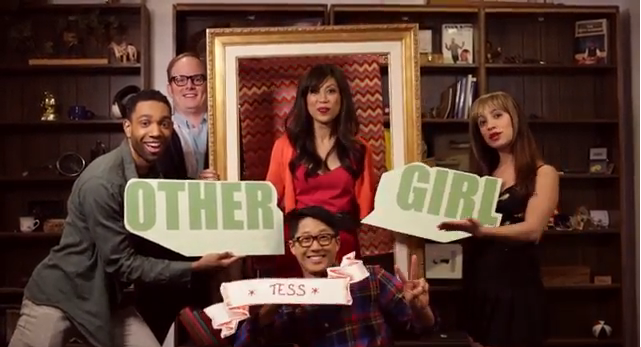
In “Typecast,” their brilliant parody of Lorde’s “Royals, actresses Tess Paras, Haneefa Wood, and Ayana Hampton display that for actresses of color, the road to stardom means playing race-based, cookie-cutter characters, with the role of the leading lady often remaining just out of reach.

Actresses who look like the ones in the video are sometimes subjected to typecast roles: Sassy black girl, geeky Asian, fiery Latina. Actresses of other races and ethnicities may not even be considered for a part. This leaves opportunities few and far between for actresses of color.

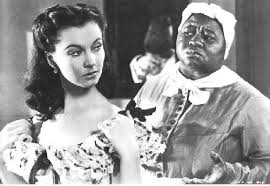
When placed in a historical context, Typecasting becomes even more problematic. In the parody, as Hampton sings, “Any maid could look like us,” I was taken back to the historical mammy figure. While we’ve come a long way from the Hattie McDaniel’s mammy in Gone with the Wind, the pool has only expanded wide enough to include other stereotypes and subordinate roles, with a few exceptions here and there.

HATTIE

Hatti McDaniel in Gone with the Wind

Typecasting women of color into supporting roles such as the main character’s best friend, secretary, or nanny, reinforces the idea that people of color are only supporters or “extras” in America, while white people are the central figures. It displays a dynamic where actresses of color don’t have their own story outside of helping the main character, not unlike the historical mammy, who usually has no life outside of serving her bosses. Such roles are seen in movies like Sex and the City, with Jennifer Hudson playing Sarah Jessica Parker’s personal assistant, and in the upcoming comedy The Other Woman, with Nicki Minaj playing Cameron Dias’ legal assistant.

Then there is the obvious problem with typecasting: the roles play off of stereotypes that project sexist and racist ideas. When consistently casting women of color for the same typecast roles, the industry renders possibilities for these women to exist outside of their stereotypes unlikely. While typecasts like the fiery Latina, nerdy Asian, and sassy black girl, are usually written for comedic affect, they reduce human beings to a one-dimensional devices that garner a few laughs at the woman’s expense and move the plot along.

Moving away from these stereotypes and adding some color to leading lady role can be good for audiences. After backlash from fans of movies Annie (2014), Hunger Games, Catching Fire, and Fantastic 4 (2015), where black actresses and actors were cast for traditionally (or what people believed to be traditionally) white roles, maybe audiences could use a little help expanding their imagination. It seems that when actors of color are cast in central, not typecasted roles, racist commenters masking themselves as “fictional purists” storm twitter with remarks about how their favorite character’s skin should be white. Yet, the more we see actresses of color playing central figures, the more we can shed the stereotypes and break down barriers for women in the industry. Maybe then American audiences will become a little more comfortable with diversity on the screen.

While we’re moving in the right direction, with shows like Scandal and The Mindy Project (though they also have their flaws) and movies like the latest remake of Annie, we still have a ways to go before we see more accurate and equal representation.

P.S. This article is part of the Top Posts. Check out the Best of A Womyn’s Worth.

Falcon and the Human Torch: Why Black Superheroes Matter

3 Apr

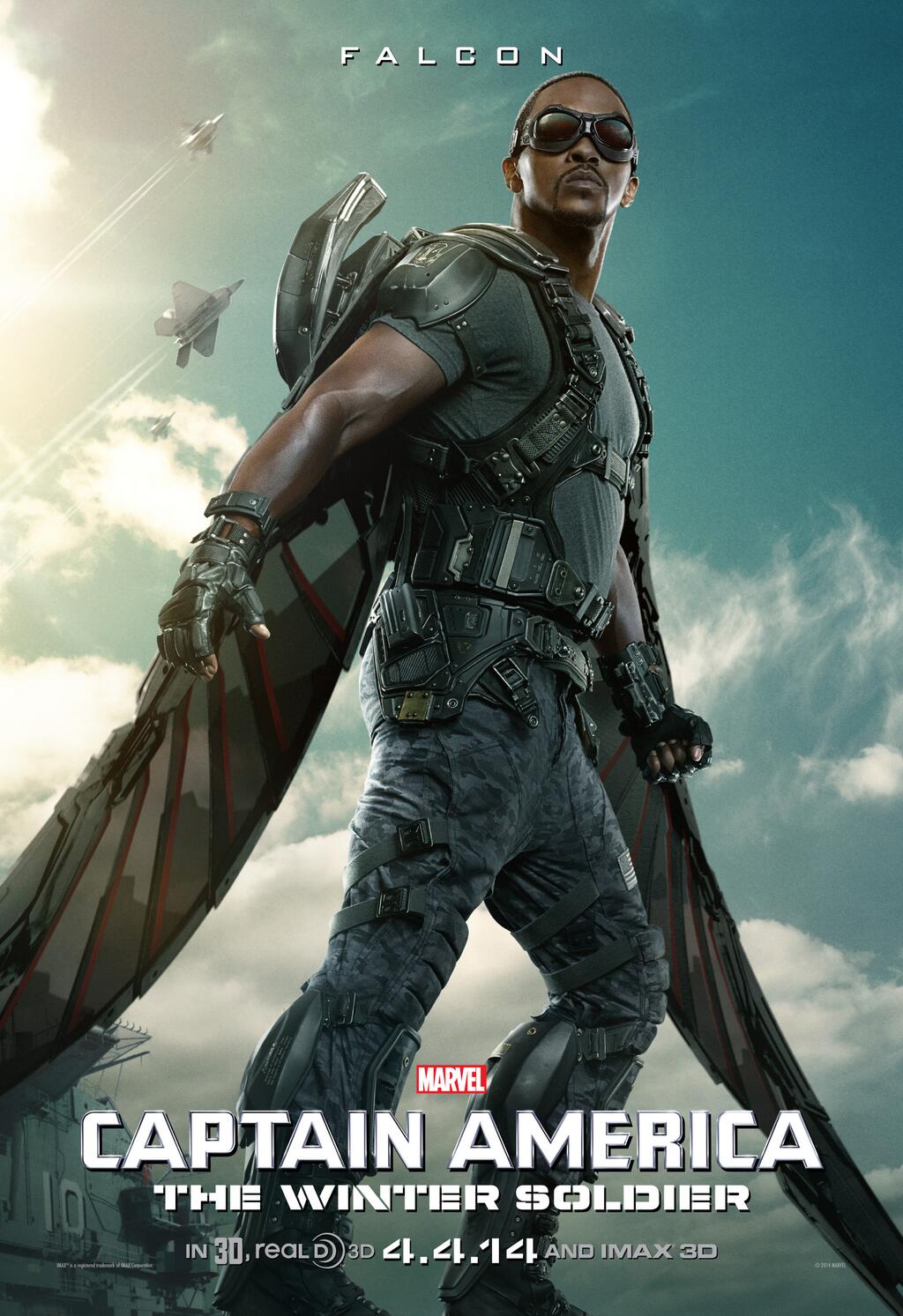
THE FALCON

Captain America: The Winter Solider hits theaters this weekend—and I will be seeing it. As the daughter of a Marvel comics fan (an O.G. 1960’s Marvel fan), and a girl who flocks to the midnight showing of nearly every Marvel and DC movie, I cannot wait to see Captain America 2.

But honestly, I could care less about the actual Captain America. He’s cool and all, but it’s the Black Widow (badass Scarlett Johansson) and the Falcon (handsome Anthony Mackie) who I really want to see.

Yes yes, it’s about time Marvel brought some diversity.

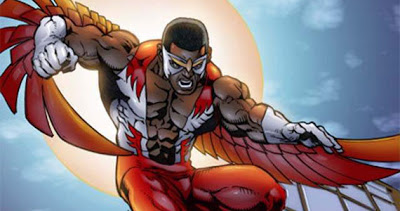
If you haven’t heard, this movie introduces the Falcon one of Marvel’s first black Superheroes. In the movie, he’s a military soldier who a wears a high-tech winged suit that allows him to fly. The original Falcon was introduced in 1969, and fought alongside Captain America and the Avengers.

We also saw a bit more color in the casting of Fruitvale Station’s Michael B. Jordan as the Human Torch in the upcoming Fantastic 4 movie.

Of course, angry racist fans masking themselves as “comic book purists” had a lot to say about how the Human Torch is supposed to be white, how producers should stick to the historical (fictional) truth and blah blah blah. People have said that about all the black characters in The Hunger Games, Catching Fire, and the remake of Annie. I think we’ve all grown tired of the BS. In 2014, it’s not a sin for the good guys in the movies to be black.

Quite frankly, America needs black superheroes.

Red-White-Falcon

Seeing someone other than the typical strong white male saving the day is bigger than just “diversity on the screen.” Media representation has always been an uphill battle for people of color. It’s a historical struggle: from the white actors in blackface in the 1800s, to the mammies and sambos of antebellum films, to the bitchy and irrational black women of Tyler Perry’s films. We’re still struggling for representations that don’t exemplify nasty stereotypes. So when I see a black superhero in a movie, I jump for joy. Because when Anthony Mackie and Michael B. Jordan appear on the big screen, they won’t be playing thugs, drug dealers, criminals, the characters who die first, or anything Tyler Perry and his white imagination can drum up; instead, they will be the ones fighting crime and saving the world.

When it comes to media representation, skin color does matter. It matters in a similar way that having black president matters. Why do you think all the elders that lived through the Civil Rights movement were crying after Barack Obama’s victory in 2008? Why do you think people celebrated the first Indian-American Miss America? These moments show historical turning points, when someone goes up against centuries-old racial tensions and comes out victorious.

It’s extremely important that children (and adults for that matter) see reflections of themselves in all aspects of society, especially in the heroes of American culture. So that we can tell our young black daughters that not only can they stop a mutant vs. human war with their superhuman abilities, like Storm, but also, they can that they can run for president or win a seat in congress with their strong determination and intellect, like Shirley Chisolm.

Of course, Marvel’s got a long way to go. Sure they get a few points for casting Jordan, Mackie, Halle Berry (X-Men’s Storm), and Samuel L. Jackson (Avenger’s Nick Fury). But they need to do more. I can’t wait until Marvel decides to feature another black woman superhero. Right now Halle Berry’s holding it down as Storm, but that’s pretty much it. While they’re at it, they must cast other people of color as well. The world’s more colorful than just black and white.