Tag Archives: Black women

I’m Not Giving Hollywood Any More Money

15 Jul

Holly Transformers

I’m not a “movie person,” but summer always brings a few films I’m excited to see. However, after writing my recent article about Hollywood’s addiction to typecasting, I couldn’t walk into a theater without feeling guilty. Every time I purchased a ticket, my black feminist conscience would yell, “Are you really going to support an industry that doesn’t give a shit about you?”

I ignored her at first, but after the disappointments from the latest movies I’ve seen, X-men: Days of Future Past, Think Like a Man 2, and Godzilla—I’m officially done with Hollywood.

I’ll save my movie money for an industry that isn’t going to regurgitate stereotypes wrapped in lame, white-washed plots.

I have 3 reasons:

1. Hollywood doesn’t know what to do with women.

As a fan of all things alien and futuristic, Transformers is usually right up my alley. But third Transformers, released prior to the latest movie turned me off for good.

The majority of the time, the lead actress screams and runs from Decepticons in high heels. I’m watching the movie yelling “Bitch, if you don’t take off those heels and run like you got some sense.”

And can she do anything else besides scream, run, and act as the distraction while Shia LaBeouf saves the day?

So I refused to see the latest Transformers because I knew it would have all the same hackneyed motifs— and according to a few reviews, I was spot on.

I mean, is anyone else tired of the Damsel in Distress in action films?

Some of these writers need to take note from The Hunger Games series.

Transformers isn’t the only movie that could’ve utilized the female characters better. In X-men: Days of Future Past, the good white men save the day while the women and characters of colors sit and wait. However, in a 90’s cartoon version of Days of Future Past, it is actually Kitty Pryde who goes back in time to save mutants and humans from their horrible future. Xmen with a woman saving the day sounds like a cools concept. Especially considering Pryde’s mutation makes her untouchable, literally.

I love Hugh Jackman as Wolverine—but it’s time for a diverse range of characters to take the spotlight.

2. White = Universal

Where are all my black leading characters? Not in action films. Not in sci-fi. Not even in animated films. Oh that’s right: black characters are ghettoized into the black film genre, which currently includes the Think Like a Man series, Tyler Perry films (ugh), and whatever Kevin Hart’s currently starring in.

As for all the other people of color: Y’all don’t even get “race-themed” genres.

Yet, whenever all of the characters in a film are white, directors love to claim that “it’s not about race.” Films like Noah and the Gods of Egypt got a lot of pushback for their majority-white cast.

When asked about the lack of diversity in Noah, Co-writer Handel gives one of worst responses: “What we realized is that this story is functioning at the level of myth, and as a mythical story, the race of the individuals doesn’t matter. They’re supposed to be stand-ins for all people.”

And there lies the problem: white is the “stand-in for all people.” Only white skin can represent the whole of our society. This thinking is the very reason why movies are so white, why you hardly ever see Asian male characters in films outside of martial arts films (and Godzilla), and why Halle Berry is the only woman of color ever to receive an Oscar for Best Actress for a leading role.

Let’s get one thing straight: whenever a cast of characters is mostly white, it’s not an accident. If race really didn’t matter, then we would see more diversity. We live in an extremely diverse country with people of origins all over the globe. You just won’t find them on the screen.

3. We’re not humans, we’re stereotypes

talk about stereotypes a lot on A Womyn’s Worth. And I’m already over my word count, so I’ll be brief with this point.

The trailer of Dear White People, a comedy about stereotypes and white people’s discomfort with diversity, pretty much sums up my feels about seeing stereotypes on the screen.


If you want my in-depth commentary on this topic, check out my article, “Where Are All the Leading Ladies of Color?” which was featured on Ms. magazine’s blog.

Finally, I know my one-woman boycott doesn’t really make a difference in anyone’s life but my own. But imagine if every person of color stopped paying money for the exclusionary crap Hollywood puts out. Box offices numbers would drop tremendously, folks will lose money, and things would undoubtedly change (You know what they say: Hit them where it hurts the most—their wallets).

Representation matters, folks. Hollywood tells us that white people are the stars and the rest of us are just extras, brought in to uphold stereotypes and act as sidekicks. So I can no longer contribute to an industry that makes billions of dollars excluding people like me or making us look bad.

So You Haven’t Heard of Afrofuturism?

21 Feb

AFROFUTURISM

So you haven’t yet heard of Afrofuturism?

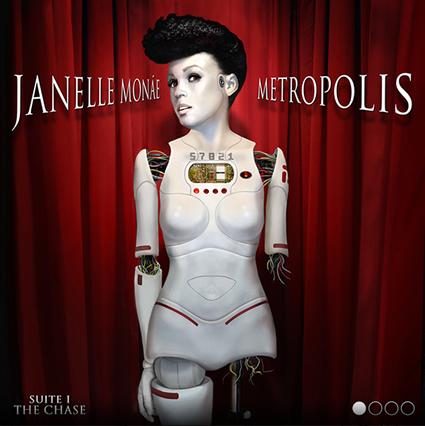
Please, allow me to upgrade your life to a plateau of awesomeness where time travel is the norm, Androids reign supreme, and Janelle Monáe happily twerks in the mirror wearing, of course, black and white.

Picture a cultural meta-genre that encompasses some of the most incredible artists, musicians, entertainers, filmmakers, philosophers, and scholars—an aesthetic where Octavia Butler, Grace Jones, Janelle Monáe, W.E.B. Dubois, Will Smith, Michael Jackson, and Erykah Badu all take center stage with a common inspiration.

A meta-genre, an ideology, an aesthetic, a movement…

AFROJANLLE

Welcome to Afrofuturism 101

Imagine a near or distant future beyond the African diaspora. Afrofuturism combines black history, present, and future to envision liberation from “otherness” and oppression through a sci-fi lens.

In less fancy words, Afrofuturism is black science fiction that is deeply interested in liberation, cultural celebration, and breaking down barriers of oppression. It provides a geeky medium for social commentary.

Afrofuturism creates a world where the black experience exists outside of the typical go-to image of thug-life (which even Justin Beiber is claiming now), “the struggle,” and hopelessness, where black people can be scientists, nerds, superheroes, aliens, and more.

Finally, the movement is inherently feminist. It creates a space for women to exist outside of the negative “isms.” It accepts women’s bodies of all shapes and sizes. Most importantly, it promotes equality.

AFROWMAN

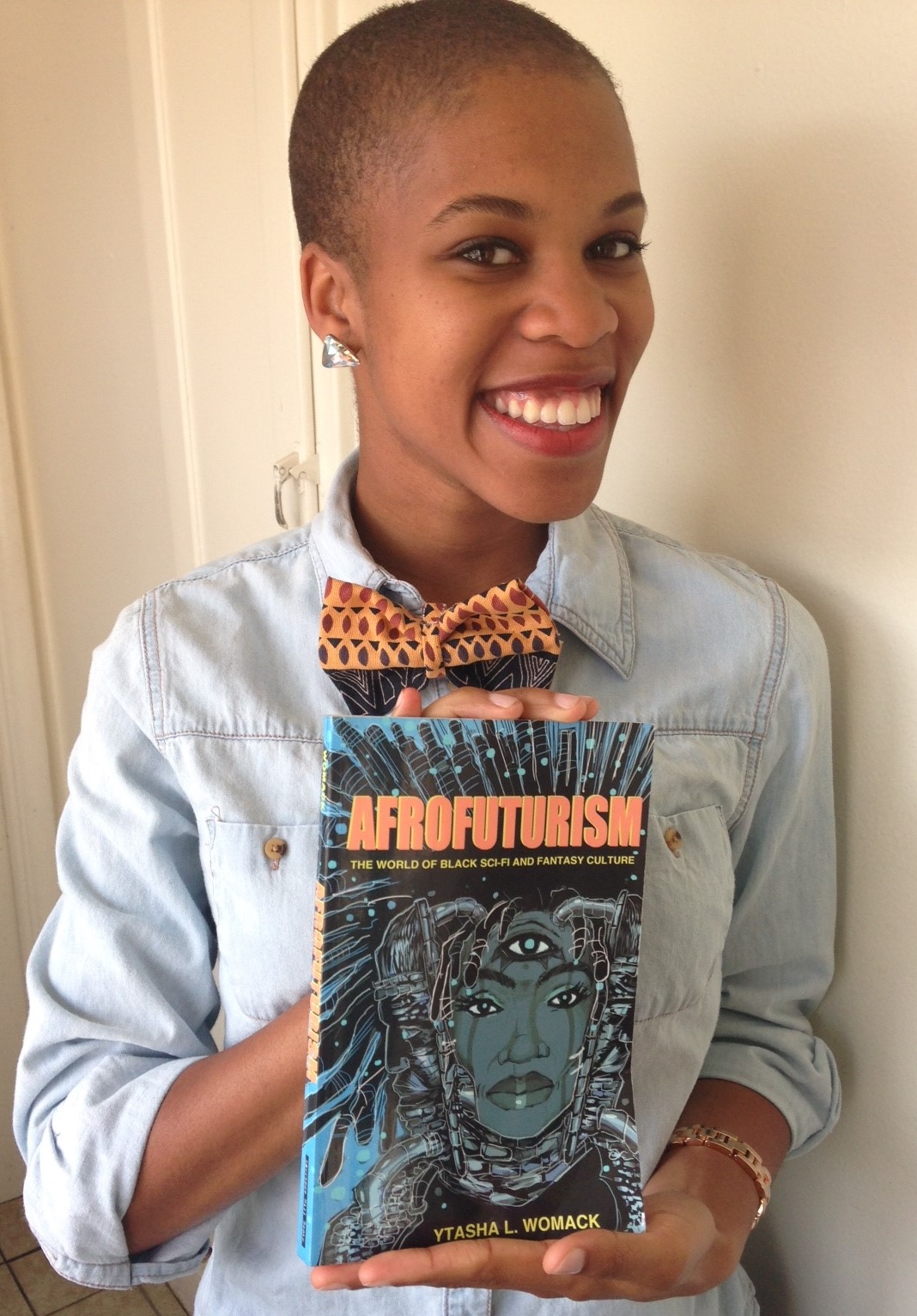
I recently picked up the book Afrofuturism: The World of Black Sci-Fi and Fantasy Culture by filmmaker, author and comic book writer Ytasha L. Womack (Yes, black women write comics…are you surprised?). The book is the perfect handbook of Afrofuturism. It’s sure to be a favorite of comic book-lovers, star-gazers, sci-fi freaks, techies, cosplayers, and everyone else in between or on the outskirts. The cover alone will draw you in.

AFROME

It’s definitely a book to check out for Black History Month, or any other month really. You’d be surprised at how this ideology makes its way into even the most unsuspecting places: middle school and university classrooms, community development plans, and grassroots movements.

Or, check out  iAfrofuturism and afrofuturism.net, 2 websites dedicated to the movement.

And by the way guys: A Womyn’s Worth just got a Facebook page (I know—long overdue). So for all of you who can’t follow on WordPress, go ahead and like it on Facebook, share it with your friends, and enjoy.

P.S. This article is part of the Top Posts. Check out the Best of A Womyn’s Worth.

Top Blogs to Follow During Black History Month

5 Feb

20010129 BLACK HISTORYHappy Black History Month Everyone! Last year, I created your Top Reads for Black History Month—but I know some of y’all didn’t even bother to turn a page during the entire month (yes, I’m shaming you). You can check out that list if you need some reading suggestions. However, if you need something short and sweet, might I suggest a few blogs and sites that may have some of the most interesting content during the month:

Racialicious-the intersection of race and pop culture.  I always turn to Racialicious when there’s a race-related debate going on. Their writers and editors are on point and always present perspectives that other news/blog outlets gloss over. (And I’ve written for them before so I’m definitely a fan!)

Twerked presents great conversation on women of color, their sexuality, their interests and their love of hip hop. Twerked gives an educated black feminist view on twerking. So you can stop watching those stupid twerking segments on nighttime news; this blogger’s got you covered.

The Gradient Liar -Black Women + art, media, social media, socio-politics, and culture. If you’re trying to upgrade your knowledge of womanist politics during this month, check out The Gradient Liar.

The Crunk Feminist Collective– The name is pretty self-explanatory. The site is a place for hip hop generation feminists to express their thoughts.

Colorlines -Though not technically a blog, Colorlines is a daily news site where race matters. Check them out for almost any topic of your interest.

Media Diversified tackles the lack of diversity in UK media. The organization has an army of writers on worldwide topics and news.

Rap Rehab is a popular site for music-lovers that want to know more about race and politics in the music industry.

Hood Feminism– creators of several trending hashtags on twitter (#fasttailedgirls, #solidarityisforwhitewomen, and more), Hood Feminism is bound to stir up some good conversation during Black History Month on both twitter and the blog.

TransGriot provides news, opinions, and commentary from a proud African American transwoman who is an award-winning blogger.

And of Course: A Womyn’s Worth will bring your weekly black history month insight when you need it. On the days when I’m not posting, check out some of those blogs I mentioned above.

P.S.: if you’re looking for some Black History Month comedy—watch SNL’s “28 Reasons to Hug a Black Guy.” I couldn’t stop laughing.