Tag Archives: Black women

Wanting to be a Big Booty Hoe

29 May

2chainz-birthday-song

The Definition of Sexy

In high school, my nickname was “Feed the Children,” because my friends joked that I was skinny enough to be in Feed the Children’s campaigns about malnourished children in third world countries (Clearly my friends weren’t very PC).

I was somewhat insecure about my thin frame because I had internalized something that I’d learned from listening to hip hop and the guys at school: girls with curves and big booties were sexy—bony little “Feed the Children,” was not.

So I always wanted to be thicker. Three years later, while studying overseas in Argentina, where my diet consisted mostly of pasta and cheese, I gained some weight and grew what became my pride and joy: my ass. Coming home from Buenos Aires with a little curve in what I believed was all the right places gave me a synthetic confidence.

Imagine my disappointment one day when I turned to the side in the mirror only to find that my booty had shrunk, and for a little while, so had my confidence.

As women, many of us are all taught at young ages —either from our parents, magazines, music, or the world around us—that part of our duty is to be pleasing to the eye. Scholars Sheila Lintott and Sherri Irvin explain in “Sex Objects and Sexy Subjects: A Feminist Reclamation of Sexiness,” women are socialized to believe that being sexy is essential to their value as human beings, and that only certain looks are defined as sexy. When someone fails to adhere to those narrow standards of sexy she may be viewed as less of a woman.

That is how I felt when I looked in the mirror and saw my lack of curves: I was less sexy; I was less of a woman.

Many of us have those times where we judge ourselves according to someone else’s definition of sexy. In doing so, we progress this idea that sexy means fitting into a very small box (more like a very small prison).

We are often taught that we are too skinny, too big, or too dark. We have too much of this and not enough of that. Most women do not fit the dominant idea of sexy.

However, many people go to great lengths to try to fit into that prison. We spend hundreds of dollars on our hair and makeup, constantly change our diets, wear the highest, most uncomfortable heels, experience a lot of pain (sometimes at the hands of beauticians, stylists, or plastic surgeons), and in the process, we deny and reject our real selves.

There’s a difference between the synthetic confidence I attained when I first noticed my weight gain and the real confidence I got from defining sexy on my own terms. Sometimes I have to remember that sexy isn’t something I can buy in a bottle at Sephora for $45. Nor is it my favorite pair of heels that make my legs look longer. Sexy is a fusion of confidence and compassion. It is a decision to live on my own terms (not according to anyone else’s expectations). Sexy is a lifestyle.

Sorority Girls Must Twerk

16 May

Image

Originally published on Racialicious.

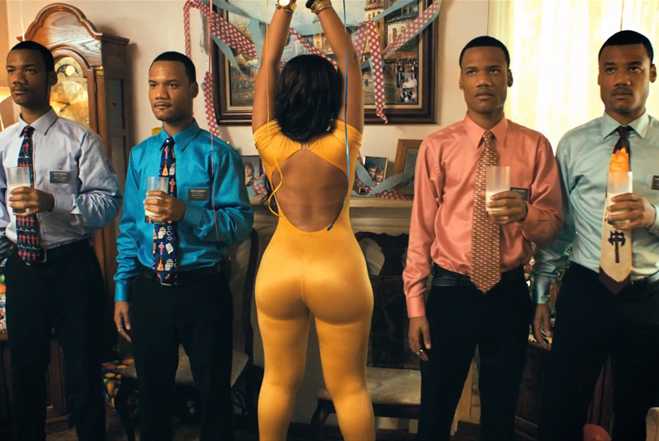
“So you’re going to twerk right?” was a common question my sorority sisters and I got when we entered a dance competition this year at our school.

Not too long ago, the university I attend welcomed its first historically black Greek-letter organization. I had the privilege of becoming a member of this sorority and was curious to see how the students of a predominately white university in a wealthy area would receive a historically black organization on its campus.

The university was widely accepting of the sorority; however, as we became more visible on the campus, we experienced much cultural insensitivity.

This year, for the first time, we participated in a sorority dance competition that raises money for charity. During the week leading up to the dance-off, several people approached us asking if we were going to twerk — as if twerking is the only style of dance a black woman can do.

Yes, most of the pleas for us to twerk on stage were jokes—you know, those obnoxious, not so funny, purposefully racist jokes—the same jokes many people shrug off and laugh along with because they are believed to be harmless.

Yet, there is a serious problem when we idly allow people to make ignorant and unacceptable comments, especially those that trivialize issues of class and race. As we read in the article, “Let’s Get Ratchet! Leave Your Privilege at the Door,” also featured on Racialicious, views about twerking employ certain bigoted ideas about poverty and black culture.

These comments and jokes about our sorority twerking relate to the effects of a black woman’s image based on media coverage. With the countless Twerk Team videos on Youtube and the glorifying of a “bad bitch” who can “bend it over and touch her toes” in commercial hip hop lyrics,this style of dance has become a fabricated indicator of “authentic” black womanhood. Essentially, the conversation about the style of dance becomes: all “real” black women can twerk.

This expectation is progressed through the numerous videos of young black women popularizing the dance style online (They aren’t the only ones doing it, but they are a significant majority). On one hand, if a woman chooses to dance sexually that is her choice. However, I find it problematic if her decision to twerk comes from commercial hip hop’s ideas about women (none of which are uplifting) and the songs that accompany the dance, such as French Montana’s “Pop That” and Juicy J’s “Bandz A Make Her Dance,” which demand a woman’s complete submission in order to sexually please her male company. Type “twerk” into youtube and you’ll find several young women accepting the sex-object role that the music demands of them. These demands become increasingly problematic when they involve race and gender. Notice that no expectations are placed on men or women of other ethnicities to twerk. People are often shocked when white women do it.

As it is extremely provocative, twerking suggests a lot about black sexuality. As feminist theorist Patricia Hill Collins discusses in Black Sexual Politics, African Americans’ use of their bodies is heavily promoted and celebrated above other abilities, such as intellect.

Maybe that is why there aren’t many stereotypes about black women being smart.

The focus on black bodies is not a new concept. Author Norman Kelly explains in Rhythm and Business that these ideas date back to slavery, when bodies were used to cut sugarcane and harvest tobacco, and raped to produce more bodies for labor. Yet, too much use of the mind was prohibited, as reading was illegal.

This use of bodies, specifically, the focus on what twerking accentuates, a woman’s behind, dates even further back to the 19th century, when Saartjie Baartman first made her appearance in Europe as the freak show Venus Hottentot. People visited the show to gawk and mock her huge behind and peek under her clothing to look at her vagina.

These 19th century views continue to exist in the comments about twerking. When people expect or demand that we twerk, black women are once again reduced to a piece of ass.

Unfortunately, many people of color have adopted some of these external views on black sexuality, as several of the jokes about our sorority twerking came from other African American students on campus. During the preparation for another show, one black student who saw us practicing also asked if we would twerk for our half-time basketball game performance. In asking this, he and other students of color who made similar comments participate in progressing harmful stereotypes of black women. Because this guy’s mind went right to twerking when he heard we were dancing, his views of women how black women should appear on stage have been influenced by disgusting stereotypes of black women in popular culture.

As leaders and promoters of equality, we must amend the incorrectly-deemed “harmless” jokes and comments about black sexuality, as they further the idea that black people are only good for physical activities such as manual labor, dancing, and sex. These jokes suppress ideas about successful black scholars and intellectual leaders.

When these dehumanizing ideas circulate in popular culture, I am concerned about how they affect our self-narratives and self-esteem. Growing up, my friends and I wrestled with what it meant to be authentically black. Our music interest, sense of fashion, and ways of dancing were all influenced by external ideas about black culture that we saw in music videos, on the radio, and from our peers (this was just before Youtube and Twerk Team became popular). As much of my teenaged perception about what “authentic” blackness meant came from BET, where currently Nicki Minaj acts as an updated Venus Hottentot (as much of her brand, appearance, clothing and lyrics point to the same two body parts Europeans gawked over at Baartman’s freak show: her ass and vagina). I eventually had to unlearn a lot of the demeaning ideas of black womanhood I was exposed to. I am still in the process of unlearning.

Calling people out on their rude jokes and comments aids this unlearning process and teaches them about the stereotypes they uphold when they make such comments.

Authors note: Hello All, I wrote this article when I was new to feminism and hadn’t realized the harm of respectability politics. My views have changed. Check out the articles below, which are more up-to-date on my Black feminist politics.

Top 7 Perks of Shaving Your Head

28 Mar

buzz cut van

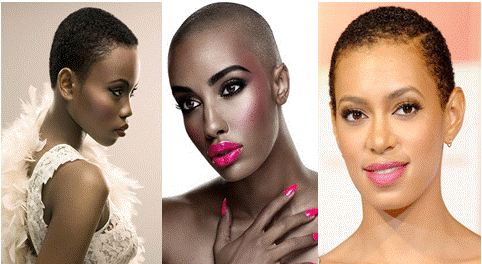
As bald and buzzed cuts become increasingly popular, women are daring to shave their heads. I’ve worn a buzzed cut for nearly 3 years, and I have to say: it’s been a psychological, emotional, and amusing experience. I had to adjust to a different look and reactions that I got because of the new look. Hair is major part of a person’s identity, and there are implications whenever someone drastically changes their hair.

And honestly, there are so many advantages to having no hair.

1. Everyone thinks you’re the most confident person in the world

People see bald/buzzed cut women and assume they are the most confident beings on the planet. It’s the bald woman’s stereotype. And I say, just go with it. Exude that confidence.

2. You don’t have to be afraid of water

On a rainy day my freshman year, two black friends and I ran back to our dorm from main campus. Our white friend trailed slowly behind.  When we got there my white friend jokingly said, “So, are black girls afraid of water?” I know that wasn’t the most PC thing to say, but it was funny and held some truth. If our hair is styled a certain way, we avoid rain, swimming, and exercise. Prior to cutting my hair, I often had to choose between straightening my hair and exercising. I hated deciding between the two because it seemed like such a shallow decision. Now I exercise whenever I want, and sometimes (rarely) I’ll even swim.

 3. Being bald weeds out shallow men

Bald is not the average type of pretty. I used to worry that men wouldn’t be attracted to me because I had no hair. And that may be the case. Some men prefer women with long hair (their loss). However, I’ve noticed the types of guys that are interested in me have a certain personality. Often times they are more open-minded, sophisticated, down to earth, and sure of themselves. (Not to say I don’t get my share of “Aye where yo boyfriend at?” That still happens—but I could spend a whole nother post talking about that).

4. Your hair is ready for any occasion

Ever have those days where you get dressed, look in the mirror, and you look absolutely stunning from toe to hairline—and then you’re hair just kills it? Buzzed cuts look perfect almost all of the time.

5. Less time and money on hair products, weaves, salon appointments, etc.

If I could take back all of the hours I spent in the salon or in front of the mirror braiding, twisting, straightening, or wet-setting my hair, I’d be a published fiction writer by now.

I know I don’t have to go into detail about the time that goes into maintaining hair. I also know I don’t have to talk about the price of a weave or any other style that requires time at the salon. Meanwhile, I can cut my own hair in less than 25minutes. Or, I can go to a barbershop and get it cut for $20.

 6. You get showered with complements

Not to seem cocky, but I always get things like “I love your style,” “Not many people can pull that off,” and “You are so beautiful.” I didn’t receive that much attention prior to cutting my hair. Buzzed cuts are bold, edgy, and make a statement. You always stand out when you’re the only bald girl in the room.

7. You’ll inspire others

I’ve noticed that people are inspired when they see women with buzzed cuts. It gives some women the reassurance that they can cut their own hair. Sometimes seeing an example of a unique form of beauty inspires others to express their own rare beauty.

Tips for women who want to cut their hair:

  • Keep your natural hairline. Some people disagree with me on this one. Really, it depends on your face. I have my natural hairline and I love it. If you’re unsure. I would keep it when you first cut it, and if you don’t like it, you can change it.
  • Just do it! I absolutely love being bald. I’d encourage anyone who is thinking about cutting their hair to do so. You’ll probably look FABULOUS.

In case you were wondering, here was my first haircut. It’s gotten shorter and shorter since then.