Tag Archives: Black women

My Black Life Matters Too: Acknowledging Police Brutality Against Black Women

21 May

W11

By De La Fro

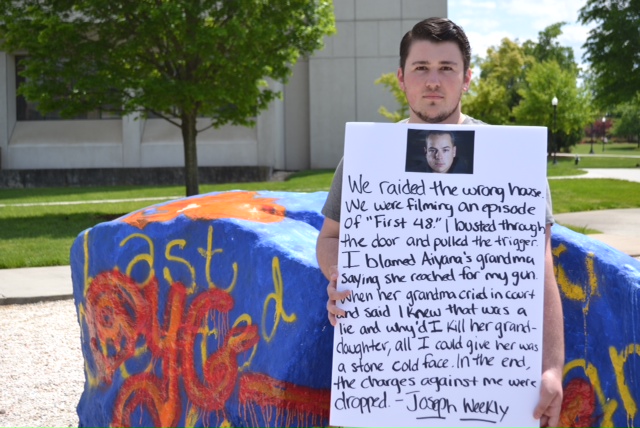
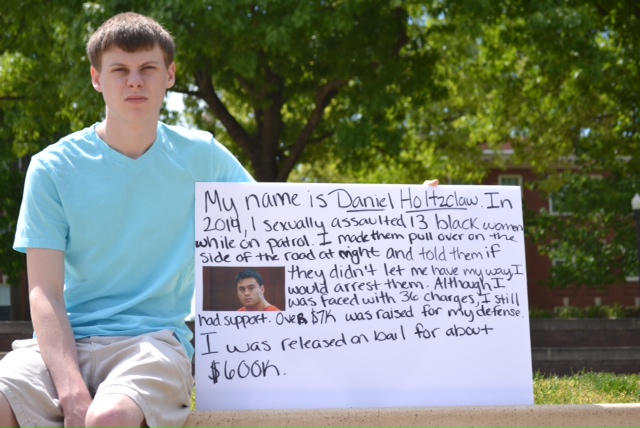
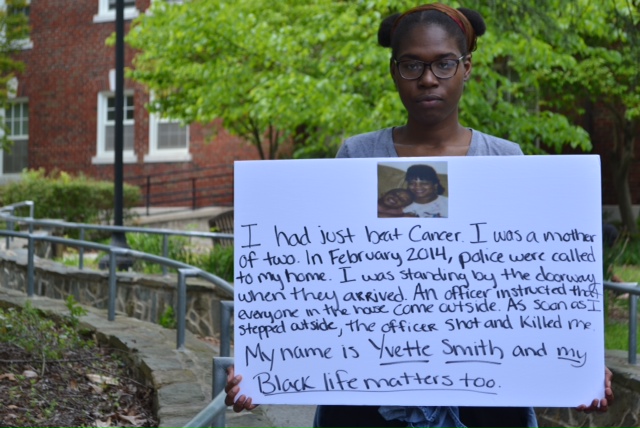
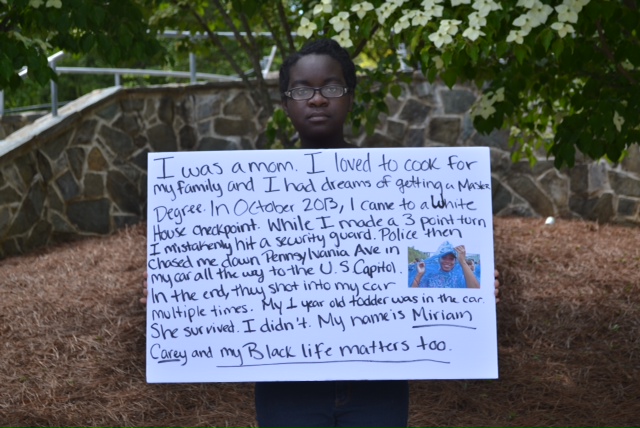
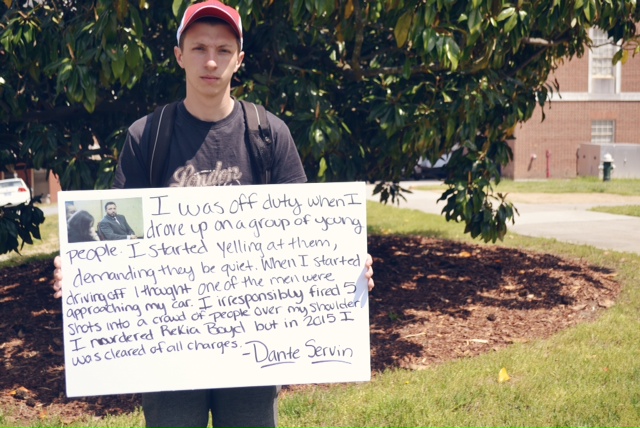
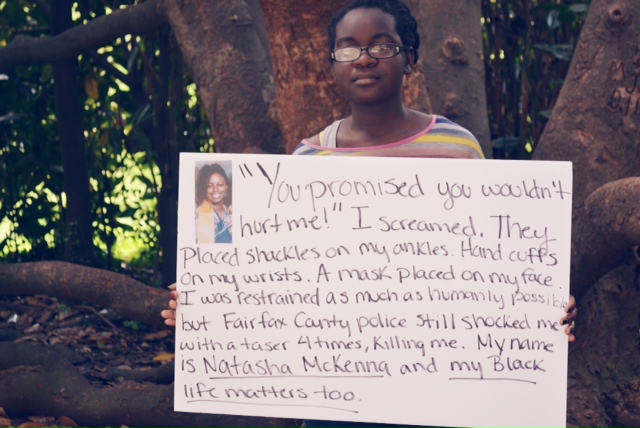
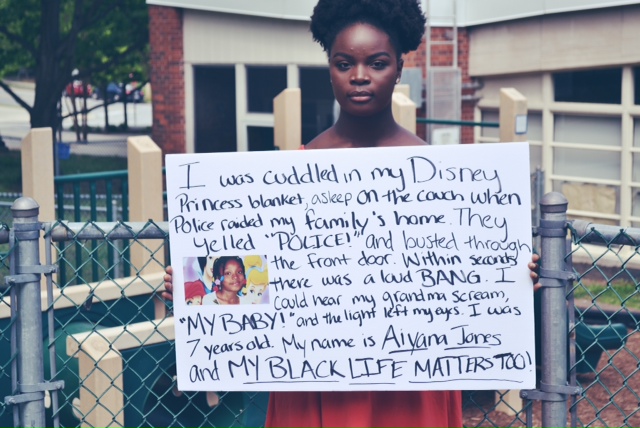
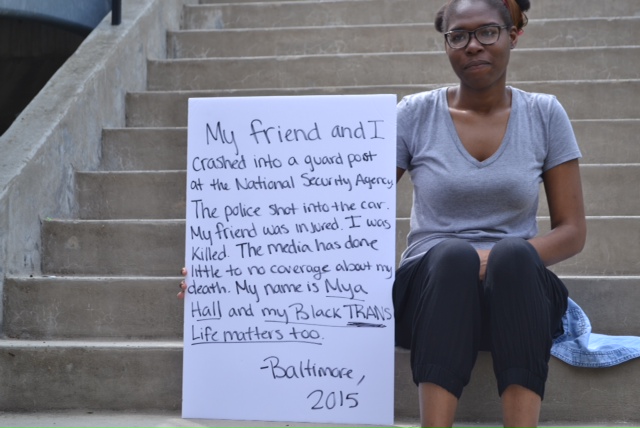
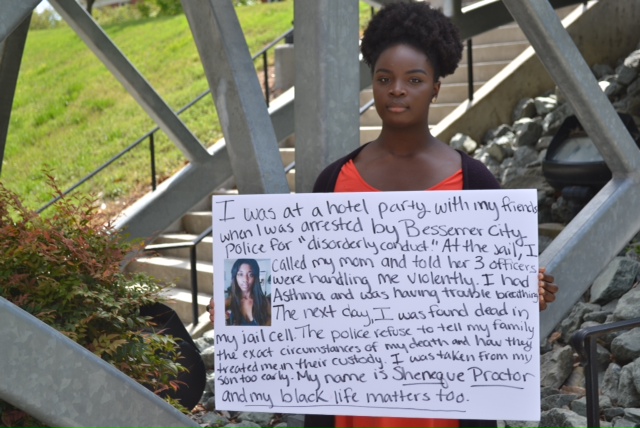
Eric Garner. Tamir Rice. Mike Brown. Sean Bell. Oscar Grant. All names that ring a bell for most, right? But what about Sheneque Proctor? Aiyana Stanley-Jones? Rekia Boyd? Tarika Wilson?
W9 W8 W5 W4W7 W6 W3 W2 W1

Oftentimes throughout the discussion of state violence, black men are centered, leaving black women almost completely erased from the narrative. People will say “Every 28 hours a black man is killed by a police officer” when really it’s “Every 28 hours a black person is killed by a police officer.” Most people fail to acknowledge or even are unaware of police brutality against black women. Not only are black women physically assaulted and murdered by police officers, black women have been sexually assaulted by police officers as well.

Even when police brutality toward black women is brought up the response is usually apathetic or watered down empathy. I’ve seen people, including black men, say that that’s taking away from the issue at hand. I’ve even seen black men say that focusing on black women being victims of state violence is “divisive” and there’s “no need to separate ourselves.” They see discussing police brutality against black women as a separate conversation instead of a part of the conversation. It’s amazing to me that if an issue isn’t centering black men, it’s almost instinctively written off as a “distraction” or “divisive” as if black men are the only black people that make up the black community. As if black men are the only ones affected by racism in the black community. As if other black people of the black community are not as valuable as cis-heterosexual black men.

There was a rally held for Rekia Boyd in New York City earlier this year and only about 50 people showed up; and that’s 50 compared to a couple hundreds, thousands, and millions worldwide who show up for black male victims. There have also been rallies held for black female victims in general and not only did few people come, few black men were in attendance too.

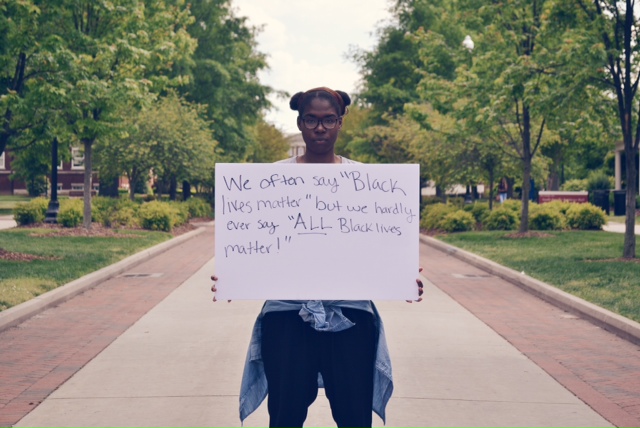
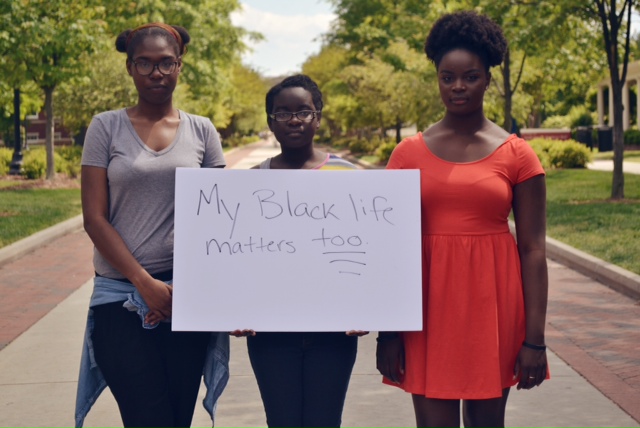
Black female activists feel the need to focus on black female victims of police brutality because time and time again, these victims are ignored from the overall “Black Lives Matter” narrative. There wouldn’t be a need to create a subset of the Black Lives Matter movement (Black Women’s Lives Matter) if black women’s lives were acknowledged just as much in the first place. This is not “separating” ourselves from the overall movement. This is simply us saying, “No, our black lives matter TOO.”

You can say black lives matter all you want but if you don’t believe ALL black lives matter then you’re saying “Only cis-heterosexual black men’s lives matter.” All we want is inclusivity in our own community. We just want you to fight for us like we’ve been fighting for you. That’s all.

So when you lift up Tamir, don’t forget to lift up Aiyana. When you lift up Eric, don’t forget to lift up Sheneque. When you lift up Sean, don’t forget to lift up Rekia. If you say you’re about black power then that means you have to be here for ALL black people, not just cishet black men. That means you fight for black women, black children, black elderly, and black LGBTQ. You fight for ALL of us. We can’t allow these black women’s memories to get lost along the way. Their black lives matter too.
W10

In conjunction with Black Lives Matter’s national call to recognize the black women’s lives and trans lives lost at the hands of the police today, May 21st, this post does what many protest don’t: #SayHerName

Guest author bio: Candace Sinclaire, also known as De La Fro, is an undergrad student at UNC Greensboro, where she’s studying film. She’s a spoken word poet and mans her own film collective “Rev Films.” She also manages own blog where she shares her love for natural hair, fashion, and socio-political topics.
Twitter – @delafro_
Photo credit: De La Fro
 
P.S. This article is part of the Top Posts. Check out the Best of A Womyn’s Worth.

Wanting to be a Big Booty Hoe (#TBT)

31 Jul

2chainz-birthday-songSexy is a Lifestyle

In high school, my nickname was “Feed the Children,” because my friends joked that I was skinny enough to be in Feed the Children’s campaigns about malnourished children in third world countries (Clearly my friends weren’t very PC).

I was somewhat insecure about my thin frame because I had internalized something that I’d learned from listening to hip hop and the guys at school: girls with curves and big booties were sexy—bony little “Feed the Children,” was not.

So I always wanted to be thicker. Three years later, while studying overseas in Argentina, where my diet consisted mostly of pasta and cheese, I gained some weight and grew what became my pride and joy: my ass. Coming home from Buenos Aires with a little curve in what I believed was all the right places gave me a synthetic confidence.

Imagine my disappointment one day when I turned to the side in the mirror only to find that my booty had shrunk, and for a little while, so had my confidence.

As women, many of us are all taught at young ages —either from our parents, magazines, music, or the world around us—that part of our duty is to be pleasing to the eye. Scholars Sheila Lintott and Sherri Irvin explain in “Sex Objects and Sexy Subjects: A Feminist Reclamation of Sexiness,” women are socialized to believe that being sexy is essential to their value as human beings, and that only certain looks are defined as sexy. When someone fails to adhere to those narrow standards of sexy she may be viewed as less of a woman.

That is how I felt when I looked in the mirror and saw my lack of curves: I was less sexy; I was less of a woman.

Many of us have those times where we judge ourselves according to someone else’s definition of sexy. In doing so, we progress this idea that sexy means fitting into a very small box (more like a very small prison).

We are often taught that we are too skinny, too big, or too dark. We have too much of this and not enough of that. Most women do not fit the dominant idea of sexy.

However, many people go to great lengths to try to fit into that prison. We spend hundreds of dollars on our hair and makeup, constantly change our diets, wear the highest, most uncomfortable heels, experience a lot of pain (sometimes at the hands of beauticians, stylists, or plastic surgeons), and in the process, we deny and reject our real selves.

There’s a difference between the synthetic confidence I attained when I first noticed my weight gain and the real confidence I got from defining sexy on my own terms. Sometimes I have to remember that sexy isn’t something I can buy in a bottle at Sephora for $45. Nor is it my favorite pair of heels that make my legs look longer. Sexy is a fusion of confidence and compassion. It is a decision to live on my own terms (not according to anyone else’s expectations). Sexy is a lifestyle.


P.S. This is a throwback post from last year. I’ll do a throwback post once or twice a month for my newer audience. Enjoy 🙂

Natural Hair vs. Weaves: It’s Time to End this Battle

21 Jul

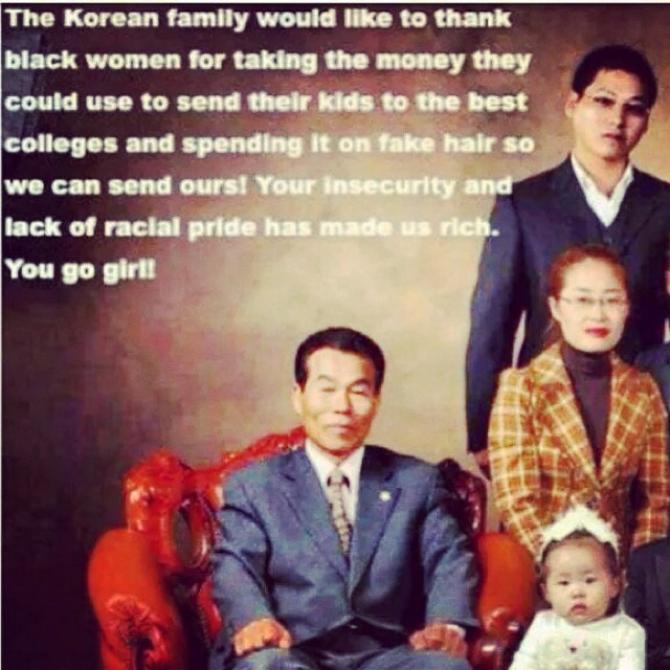
NAT solangeLast week, The Root published an article criticizing a meme that made fun of black women who wear weaves.

Weave V. Natural

Writer Jenée Desmond-Harris pointed out that this meme makes various assumptions about black women and their hair.

Contrary to what I expected, when I scrolled through the comments, tons of people agreed with the meme. Many of them argued that all black women who do not wear their hair in a natural style are struggling with low self-esteem, internalized racism, and self-hate.

In order to pull some folks out of this shallow, misguided thinking, I immediately felt the need to write this post. Let a buzzed-cut girl (who’s been natural her whole life) break it down.  It’s passed time to end this hair feud.

In defense of weaves and wigs:

Now I won’t sit here and act like internalized racism isn’t an issue in our community. Some people have been taught (at very young ages) that nappy hair is ugly and unkempt. Sometimes weaves, relaxers and other hair trends are an expression of the internalized black hate that has been in our world for centuries.

However, not every girl with a weave has internalized racist views about her hair.

Wearing a weave doesn’t automatically mean you have low self-esteem or self-hate just like wearing natural hair doesn’t automatically mean you’re confident. Michelle Obama wears a weave. So does Janet Mock, Oprah, Shonda Rhimes, Kerry Washington, Beverly Bond (Creator of Black Girls Rock), and many other powerful women. These women have to have a certain level of confidence in order to make it as far as they have.

Oftentimes women wear weaves for protective styling and convenience. Sometimes it’s easier to throw on a cute wig or wear a weave rather than raking through your hair and styling it all the time. Natural styles, including locs, can take quite a bit of time and effort to maintain.

In defense of Naturalistas:

Being natural isn’t always easy. It takes a lot of courage to be natural in a society that has an all-around hate for natural hair.

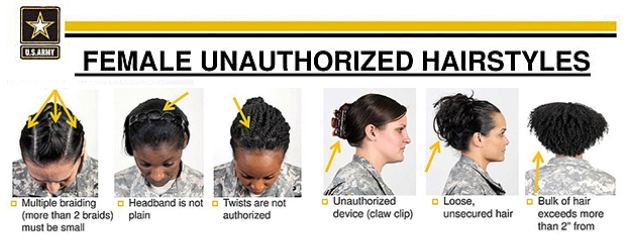
Natural girls get very little love in the mainstream, as very few of our major pop stars wear their hair natural when they’re in the spotlight. You hardly find natural hair in Hollywood, fashion, or even the White House (Wouldn’t it be cool to see FLOTUS rockin some double-strand twists). Natural hair is still pretty revolutionary, because unfortunately, our world still has an obsession with European standards of beauty Unfortunately, our naturalistas are penalized and attacked for wearing their natural hair in various situations. Locs and afros are often viewed as unprofessional in a work environment, several private schools have banned little black girls from wearing afro puffs, and black women in the military have recently faced stricter regulations on certain natural styles.

NAT hairYet, natural hair has become on-trend lately. Tons of women are having the Big Chop, and there are beauty bloggers, tons of Pintrest, Tumblr, and Instagram accounts dedicated to natural hair.

Yes, we do need to teach that black hair is beautiful in its natural state, but we don’t need to shame others for straighter styles.

There are benefits and drawbacks to both natural hair, weaves, and relaxed hair. People do what works best for them.

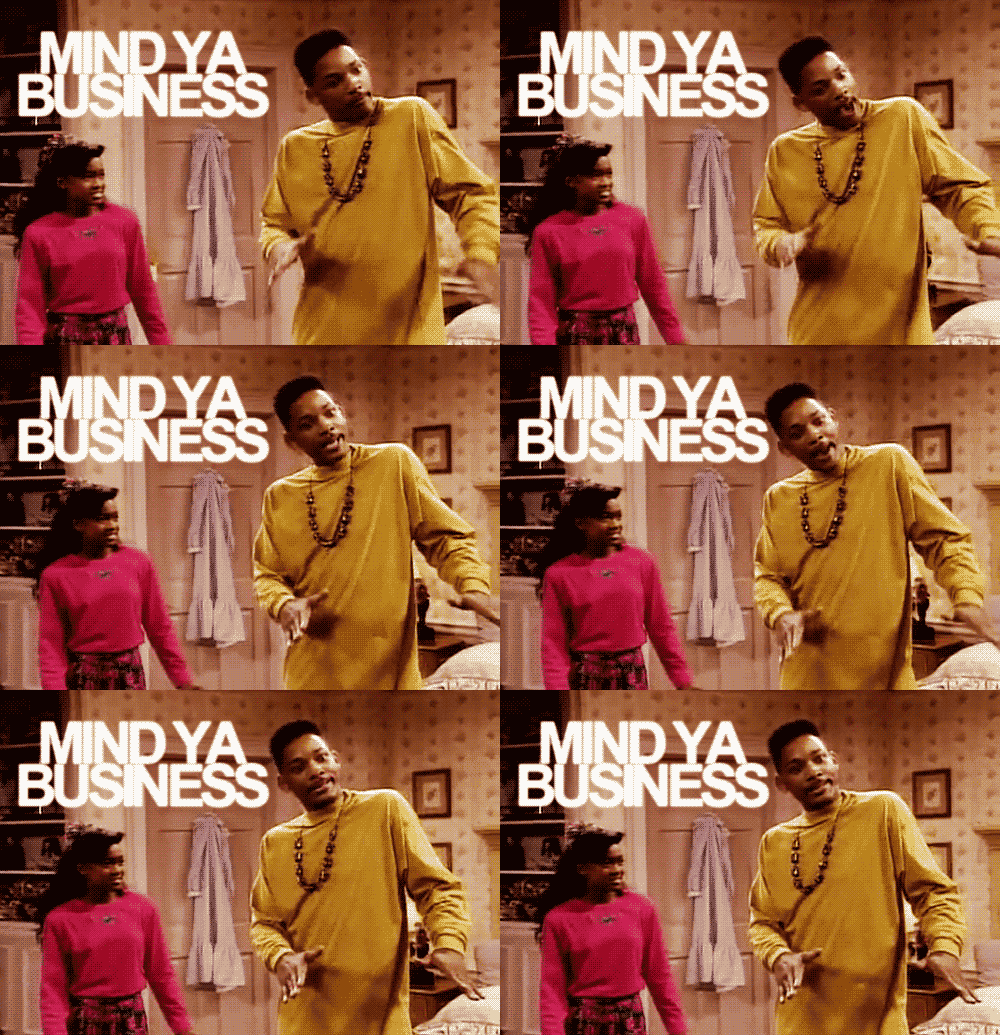
At the end of the day, who died and made anybody the hair police? Browsing the internet, you’ll find memes making fun of natural girls and shaming girls with weaves. So whether you wear a weave or your own hair, small-minded people will talk shit either way. If you have a problem with anyone’s hair type or texture, this is all I have to say to you:

Mind ya businessMind ya business, that’s all. Just mind ya business. If it ain’t growing out of your scalp then you have no need to comment or feel any type of way about it.


Love what you read? Share it with your friends on Facebook!