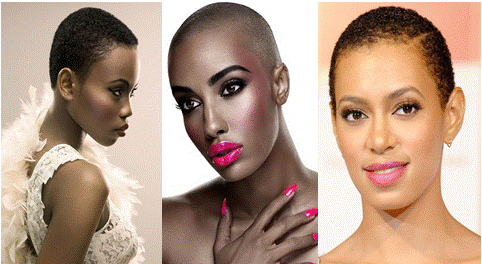
As bald and buzzed cuts become increasingly popular, women are daring to shave their heads. I’ve worn a buzzed cut for nearly 3 years, and I have to say: it’s been a psychological, emotional, and amusing experience. I had to adjust to a different look and reactions that I got because of the new look. Hair is major part of a person’s identity, and there are implications whenever someone drastically changes their hair.
And honestly, there are so many advantages to having no hair.
1. Everyone thinks you’re the most confident person in the world
People see bald/buzzed cut women and assume they are the most confident beings on the planet. It’s the bald woman’s stereotype. And I say, just go with it. Exude that confidence.
2. You don’t have to be afraid of water
On a rainy day my freshman year, two black friends and I ran back to our dorm from main campus. Our white friend trailed slowly behind. When we got there my white friend jokingly said, “So, are black girls afraid of water?” I know that wasn’t the most PC thing to say, but it was funny and held some truth. If our hair is styled a certain way, we avoid rain, swimming, and exercise. Prior to cutting my hair, I often had to choose between straightening my hair and exercising. I hated deciding between the two because it seemed like such a shallow decision. Now I exercise whenever I want, and sometimes (rarely) I’ll even swim.
3. Being bald weeds out shallow men
Bald is not the average type of pretty. I used to worry that men wouldn’t be attracted to me because I had no hair. And that may be the case. Some men prefer women with long hair (their loss). However, I’ve noticed the types of guys that are interested in me have a certain personality. Often times they are more open-minded, sophisticated, down to earth, and sure of themselves. (Not to say I don’t get my share of “Aye where yo boyfriend at?” That still happens—but I could spend a whole nother post talking about that).
4. Your hair is ready for any occasion
Ever have those days where you get dressed, look in the mirror, and you look absolutely stunning from toe to hairline—and then you’re hair just kills it? Buzzed cuts look perfect almost all of the time.
5. Less time and money on hair products, weaves, salon appointments, etc.
If I could take back all of the hours I spent in the salon or in front of the mirror braiding, twisting, straightening, or wet-setting my hair, I’d be a published fiction writer by now.
I know I don’t have to go into detail about the time that goes into maintaining hair. I also know I don’t have to talk about the price of a weave or any other style that requires time at the salon. Meanwhile, I can cut my own hair in less than 25minutes. Or, I can go to a barbershop and get it cut for $20.
6. You get showered with complements
Not to seem cocky, but I always get things like “I love your style,” “Not many people can pull that off,” and “You are so beautiful.” I didn’t receive that much attention prior to cutting my hair. Buzzed cuts are bold, edgy, and make a statement. You always stand out when you’re the only bald girl in the room.
7. You’ll inspire others
I’ve noticed that people are inspired when they see women with buzzed cuts. It gives some women the reassurance that they can cut their own hair. Sometimes seeing an example of a unique form of beauty inspires others to express their own rare beauty.
Tips for women who want to cut their hair:
- Keep your natural hairline. Some people disagree with me on this one. Really, it depends on your face. I have my natural hairline and I love it. If you’re unsure. I would keep it when you first cut it, and if you don’t like it, you can change it.
- Just do it! I absolutely love being bald. I’d encourage anyone who is thinking about cutting their hair to do so. You’ll probably look FABULOUS.
In case you were wondering, here was my first haircut. It’s gotten shorter and shorter since then.




 A Woman's Worth