Archive | Self Empowerment RSS feed for this section

Relax, Relate, Release! A Black Woman’s Need for Mindfulness

27 Jul

Mindfulness

Since graduating from college two years ago, I’ve been writing freelance articles, taking classes part-time at a community college, and holding down a full-time job at a PR agency. I’ve been grinding in order to accomplish my goals.

And I’m not the only one. A recent report shows that the number of Black-women owned businesses grew 322%. Black women are the fastest growing group of entrepreneurs in the nation.

Black women are making things happen—starting businesses, graduating from college at exponential rates, leading #BlackLivesMatter protests to make our nation a better place, and raising children to be even more successful.

Basically, we get shit done.

But sometimes, many of us are too productive for our own good.

Many of us live up to that Strong Black Woman image, which both empowers and harms our well-being. Sometimes, we are so busy making moves that we forget to take care of ourselves.

I can’t tell you how often I’ve chosen to write an article or work on items on my never-ending to-do list over cooking myself a decent meal. I’d gotten into a bad habit of choosing productivity over emotional and physical health—and, as a result, my diet was lacking vital nutrients, I was always worn out, red and glossy became the normal look of my eyes, and I’d began to pull out my hair.

When I recently took a few days off to relax, I noticed that I literally could not sit still. While I was eating a meal at the dinner table, I had impulses to check my phone for new emails. I couldn’t focus on doing one single thing because I’d become so accustomed to multitasking.

My desire to be hyper-productive all of the time had driven me half-crazy.

Originally, I thought taking a break every now and then would help me remain sane in my busy situation. But I’m not very good at taking breaks. I’m currently pursuing three careers at once, so I work seven days a week and usually only remember to take breaks when I’m on the verge of a mental breakdown.

Mindfulness has become my remedy.

Mindfulness is the practice of giving your full attention to whatever it is you’re doing. It means focusing on the present moment, while calmly acknowledging and accepting your feelings, thoughts, and bodily sensations. It can be extremely therapeutic, especially for busy-bees like myself.

Mindfulness counters crazy schedules by reminding you to chill out, take a breath, and smell the roses.

I practice mindfulness in three small ways:

I cut down on multi-tasking while eating

I used to be one of those people who eats lunch at her desk so I can get more done—which such a shame, considering I usually cook pretty delicious meals. Rather than mindlessly shoving food down my face, I started paying more attention to what I’m eating. This way, I can make sure I’m getting enough food and savoring every bite.

I watch my time-obsessiveness

Because of my hyper-productivity, I often plan things by the hour. I’ll schedule my whole day so that every hour is accounted for and so I can make sure I’m getting things done every hour. I was constantly checking the clock and setting alarms. This became tedious, turning everything into a chore and adding unnecessary stress to my day when things took more than the amount of time I allotted myself. Instead, I try to pick two or three important tasks to do and not worry about the exact hour I will complete them.

I take the time to breathe

Journaling and meditation help me take breaks throughout the day. Sometimes that means walking outside of the office to take deep breaths for a few minutes (this helps a ton when clients are asking me to move mountains, as they often do). Other times I’ll journal in between various weekend errands. Taking a few moments out of my day, or sometimes a good chunk of time to write and process my feelings helps me to reflect, solve problems, and just breathe.

Now, I’m not a pro at this. I only just started, and often mess up. But I’ve learned not to judge my ability to practice mindfulness. For people who live by their multiple to-do lists, mindfulness can be difficult. I’ll often catch myself reaching for my list when I’m supposed to be enjoying the delicious mango sorbet I treated myself to. Then, before I begin criticizing, I slide the phone away and promise myself not to get up from the chair until I’m done fully enjoying the sorbet, which also often fails. Sometimes I think I should tie myself to the chair with my phone and computer completely out of reach.

But over time, I think I’ll get better. Mindfulness is a beautiful practice of self-care. And it reminds me that self-care is just as important as hard work.

Photo courtesy of Mrs. Janet R. via Flickr.
5 Reasons Black People are So Bomb in 2015

31 Mar

love black 7

Black people, have I told you I loved you lately?

Not a day goes by where I am not enamored by Black people’s all-around excellence. Whether I’m walking down the street, in the grocery store, or scrolling down my Twitter feed, my day is saturated with Black beauty, intellect, humor, activism, and creativity.

So let’s take a look at the top 5 reasons Black people are so bomb in 2015:

1. Black Beauty

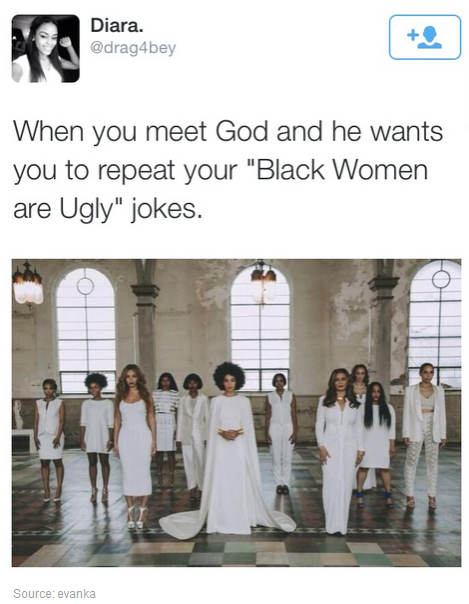
Did you all see all the stunning photos from #BlackOutDay last month? Black folks seem to have every damn thing #OnFleek.

Black girls are stepping out with the most beautiful hair styles. The natural hair community is thriving, with baddies wearing faux locs, box braids, Senegalese twists, and afros of all shapes and colors. And the girls with weaves are gorgeous too (don’t get it twisted).

Black Love 2

And I don’t know if it’s because I live in LA, but the Black men I’ve been crossing paths with are hotties.

Black is beautiful—if you haven’t already noticed.

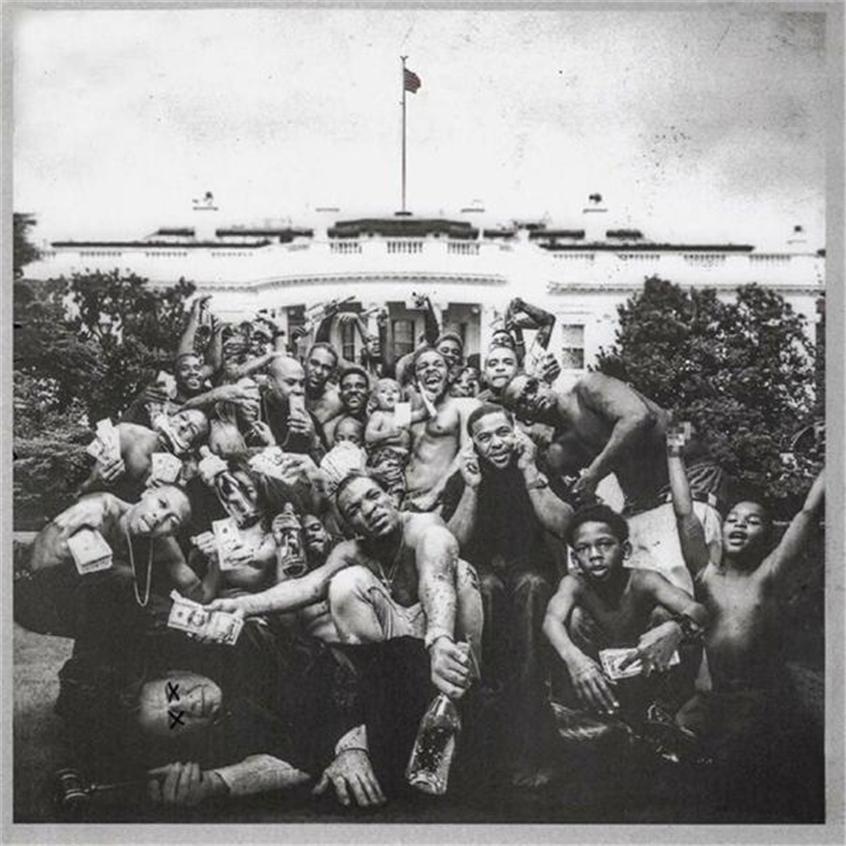
White folks (Ahem, Iggy, Kylie, etc.) would like to know what Black people are drinking to make us so freaking stunning. They’re probably somewhere listening to “The Blacker the Berry” hoping Kendrick left some breadcrumbs to the path to flawlessness.

2. Black Music

To Pimp a Butterfly AWWSpeaking of Kendrick, our artists are killin it (well, some of them). Hip hop fans are still enjoying the newly released To Pimp a Butterfly and entertaining arguments about whether or not Forest Hills Drive was better. Meanwhile, J. Cole’s new “G.O.M.D.” video was pretty fitting for the times, considering our blactivists and allies are fighting back against white supremacy.

Also, did you hear that the Misseducation of Lauryn Hill will be added to the Library of Congress?

The Library of Congress stated that the album is “a work of honesty in which Hill explores her feelings on topics that included the deep wonder of pregnancy, the pitfalls of modern relationships and the experience of the sacred. The album effortlessly fuses soul, rhythm and blues, rap and reggae. Hill’s vocal range, smooth clear highs and vibrato are stunning.”

Anybody want to disagree?

3. Black Humor + Intellect

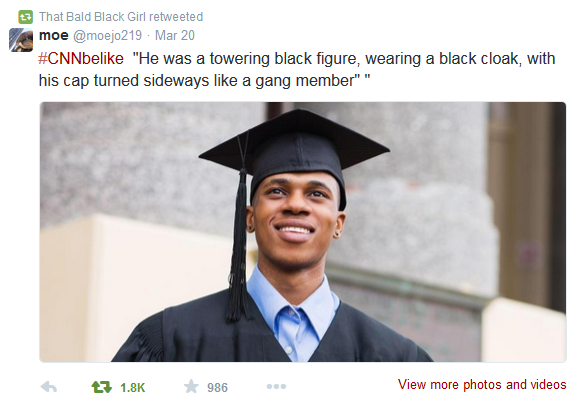
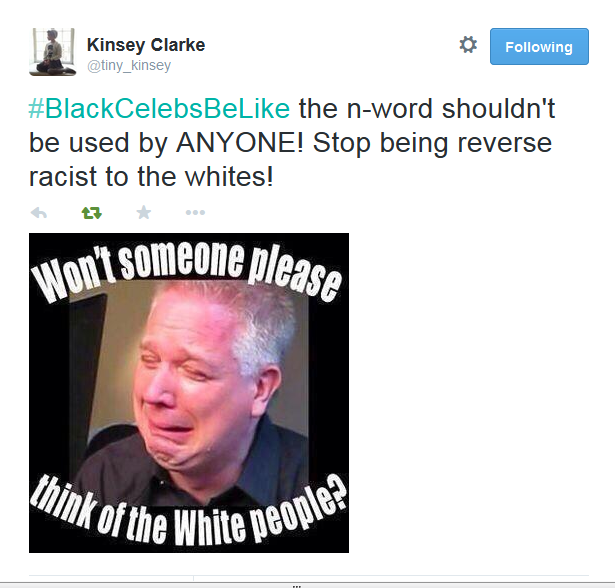
I have to give a shout out to Black Twitter. Y’all always have me snapping my fingers, laughing my ass off, shouting hallelujah, and gaining serious insights. Black folks online are very good at telling you about yourself and making it hilarious. Just ask the celebrities that were made fun of in #BlackCelebsBeLike. Black Twitter and Black Tumblr  preach so much truth and demand our nation to “do better.” Hashtags like #BlackLivesMatter #BlackCelebsBeLike, #CNNBeLike, #NotJustSAE, #OverwhelmingBlackness and #NotJustUVA bring about necessary conversations.

Exhibit A:

Love Black 4


Exhibit B:

Love Black 3

And this jewel had me dying:


Love Black

Are your Twitter and Tumblr feeds not poppin like mine? Follow the people I’m following.

Additionally, we have our culture critics and intellectuals holding it down: Marc Lamont Hill, Melissa Harris Perry, Franchesca Ramsey, Jessica R. Williams, just to name a few. The knowledge that comes out of their mouths can and is changing our world.

4. Blactivist Protests
I know you don’t think those #BlackLivesMatter protests are a thing of the past. Nope—activists are still demonstrating, demanding justice, and not taking shit from our nation’s white supremacist mindset. Mainstream media may not be broadcasting it anymore, but we already know from those #CNNBeLike tweets that mainstream news outlets ain’t shit.

It’s been several months after the initial protest in Ferguson and I’m still getting emails and Facebook notifications about upcoming protests and small groups of activist meeting with elected officials. It’s inspiring to see people taking care of business.

5. Black Future
Of course, there is much more Black Excellence to come.

Things I’m looking forward to Black people doing:

  • Toni Morrison’s new novel God Help the Child
  • Brandy playing the role of Roxie Hart in the Broadway show Chicago
  • Michael B. Jordan playing the Human Torch in Fantastic Four
  • Anything Mo’ne Davis has coming out
  • The tons of black 2015 graduates making moves

Black people—you are bombAF.

Your Black Excellence encourages me on a daily basis. Thank you for being so inspirational.

P.S. This article is part of the Top Posts. Check out the Best of A Womyn’s Worth.

Uncovering Black History in a Seemingly White Nation

17 Feb

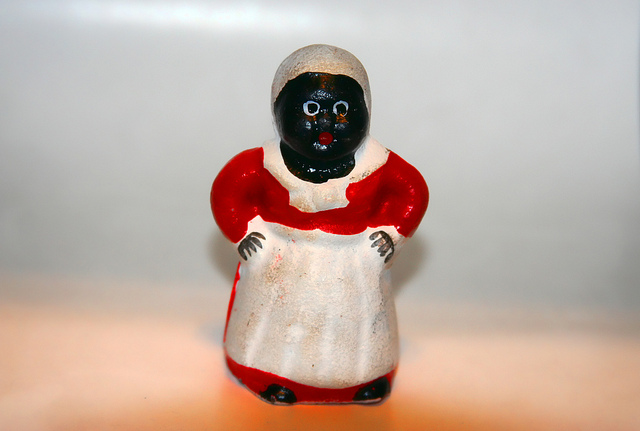
MammyOn a jog one morning through the streets of Buenos Aires, where I’d been studying abroad, I caught a glimpse of a small black figure in the window of a bakery. I stopped and stared into the window for a while, until one of the workers in the shop came to see what the problem was. I couldn’t explain it to her, because I didn’t think she would have fully understood my feelings of shock and disappointment about the figure. Other than the two I’d traveled to Buenos Aires with, that ceramic mammy was the only black face I’d seen in weeks.

A month after my mammy sighting at the bakery in Belgrano, a small middle class neighborhood in the city, I found another one in La Boca, a lower class neighborhood with the popular tourist attraction Caminito, which is known for its brightly colored buildings and association with Tango music history. In an old house that doubled as a museum, a non-black friend of mine said, “Look Shae, there’s you.” I turned in the direction her finger was pointing to find a life-size mammy statue standing just under a clothes line.

It bothered me that the mammy, which sparks much controversy and points directly to our nation’s racist past and present, is one of few images of black people in plain view in Buenos Aires. Yet, the figurines acted as another form of proof of black presence and influence on Argentine culture.

Though hidden, Argentina is saturated with cultural influences from the African diaspora. Visit Caminito or any milonga (a dance hall for Tango) on any night of the week, and you will find many people dancing Tango, a dance largely influenced by African slaves in the country. Walk through the famous outdoor market, the Recoletta fair, on a Sunday afternoon, and watch men dressed in white performing Brazilian-style capoeira, a martial dance created by Angolan-Brazilian slaves. On any Thursday morning, stop by Plaza de Mayo, the plaza located in front of the famous Casada Rosada, where the nation’s president works, and watch the mothers of los Desaparecidos (the Disappeared) march to remind their country of a time when their government kidnapped, tortured, and killed their loved ones. The mothers march under an image that many black feminist scholars associate with the “dark feminine” Black Madonna.

Sadly, this is a history and influence that many Argentines are extremely unaware of. I asked nearly every Argentine I met why there so few black people in their country. The replies usually fell into three main answers: There were never any black people in Argentina, they all died of yellow fever in the 1870’s or they all died in wars against Paraguay or Britain. Of the many tours I took through the “Paris of South America” during my year abroad, none of my guides spoke of the presence of blacks in Argentina.

Knowing that Buenos Aires was a major slave port and that many countries that imported slaves in the past currently have a visible black population, it was strange to find so few people of African descent walking down the streets of the capital city. Actually, the locals were pretty shocked to see me in their hometown. Normally, they stared relentlessly, touched or kissed my skin or asked if I was from Brazil.

Their reactions to my skin color and the lack of blackness in the country left me thinking: Why the hell is this country so whitewashed? Who were the Afro-Argentines of the past? And where are they now?

Buenos Aires isn’t the only country with a hidden African past. Other countries such as Mexico and the U.S. Virgin Islands are known to have found Negroid skeletons dating back to B.C.E. There are plenty of countries overseas that have African influence due to African exploration, international trade and slavery. Sometimes, that history has to be intentionally sought out, as it may not be always be taught in schools and is not common knowledge.

For travelers of color who seek to find more information on black history throughout the African diaspora, here are a few ways to uncover what has been buried or ignored:

Ask everyone you meet

Sometimes information from the locals and stories from friends can point you into the right direction. My academic professors didn’t talk much about African influences on their country, but my tango professor did. Because of all the myths about tango originating in Europe, she wanted us to get it right. She taught us how tango was formed, including its influences from black Argentines. Asking the people around me gave me a general since of the common beliefs about black history in the area. Comparing it with scholarly works helped me to figure out what was possible and what didn’t make sense.

Look for alternative narratives, including myths

Because I knew that some of my friends’ answers about Afro-Argentine history were blatantly wrong, I had to search even further. Online articles and books pointed to myths that the first president was partially black. While many scholars did not prove this to be true, as calling someone mixed race in those days could have also been a political slur, the myth and its alternative point to clues of how black people were viewed after slavery was abolished. Scholarly texts online, books and news articles can fill gaps in knowledge and understanding. Additionally, finding a black advocacy group, like Africa Vive in Argentina, can help piece together information about the current status of black people in the country.

Find out what the country borrowed from other cultures

It may be easier to look to the country’s arts for a link to its African roots. The types of music the people listen to, the popular styles of dance, the clothing they wear and other subtleties can give hints and clues to additional cultural influences.

Good luck!

Happy Black History Month and #BlackFutureMonth

Photo courtesy of Richard Elzey via Flckr.