Archive | Race and Culture RSS feed for this section

Dear White People: The Only Time it’s Ever Okay to Wear Blackface

20 Oct

blackface4Dear White People, Blackface and Cosplay

Dear White People came out in theaters over the weekend and was so full of truth. The movie hit close to home for many black students on a predominately white college campus, displaying race relations with humor. It’s a satirical film with a breath of fresh air amongst the Tyler Perry films and all those movies where Kevin Hart plays the same character again and again. Though Dear White People had its flaws, it’s definitely a must-see.

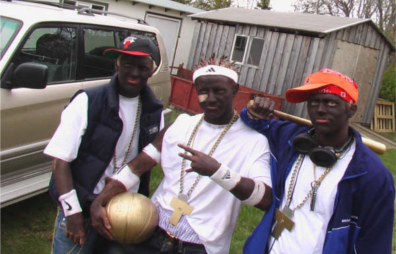
The climax of the movie takes place at a race-themed party, where white students are invited to “unleash their inner negro,” and dress in blackface, afros, and obnoxiously large chains—like they’d just walked out of the “All Gold Everything” video (thanks, Trinidad James).

Sadly, these parties aren’t uncommon on college campuses, and ignorant white people party in the most insulting outfits they can find. Somehow, the conversation always comes back to blackface.

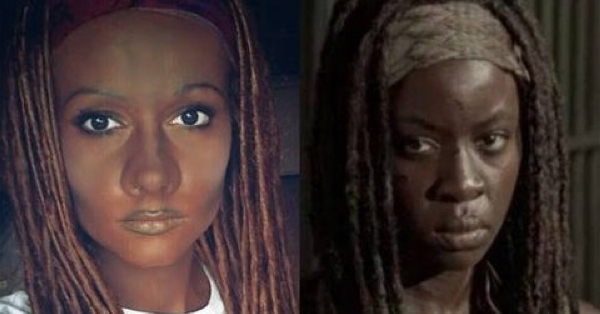
We haven’t even made it to Halloween yet and people are already donning blackface. Recently, cosplay enthusiast Kira Markeljc received loads of backlash for darkening her skin to cosplay Michonne from The Walking Dead.
blakface2

So people began to question whether cosplay is an acceptable time to darken your skin for a black character.

Cosplayers often paint their skin to become characters like the Hulk or Mystique. However, painting your face blue or green is not the same as painting it in someone else’s race.

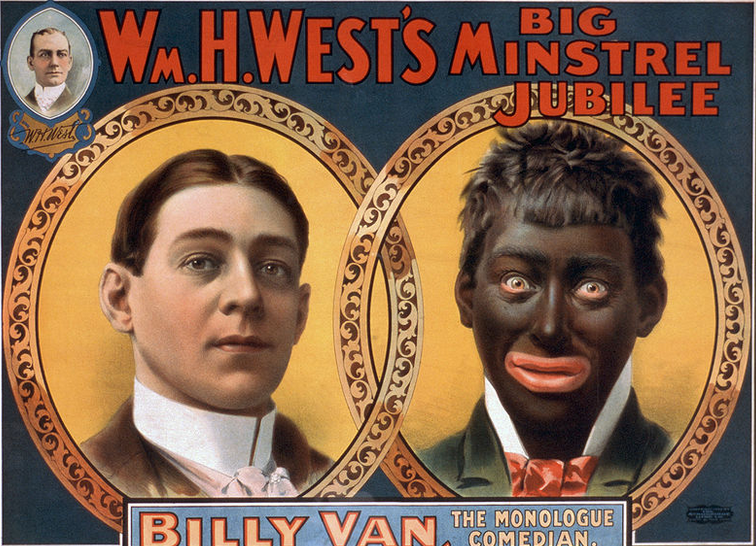
Blackface is rooted in our nation’s racist past. It was used to mock black people in minstrel shows. A blackface character made fun of slaves and free blacks of the 19th century. These minstrel shows cemented and proliferated racist images of black people around the world. And much of those ideas about black people from those minstrel shows still exist today.
blackface1

So yes, hundreds of years later, blackface is still insulting.

I’m sure the cosplayer didn’t mean to insult anyone—but she did. Her intentions mean very little and her ignorance doesn’t make her innocent—especially considering she was not at all sorry after people called her out on it. She could have easily played Michonne without the paint, and not resurrected the ghosts of America’s racist past (and present).

So for the record, no—it is never okay to wear blackface. Not for Halloween. Not for cosplay. Not for anything.

Oh and dear white people, you can also stop dressing up as Native Americans, Latinos, and any other race or ethnicity for Halloween; it’s just as racist.


P.S.: Go see Dear White People. Let me know what you think of the movie.
Columbus Day and the Erasure of Black History

13 Oct

Came Befoe Columbus

We all know Columbus didn’t discover America.

Yet, 522 years later, famous white people still get credit for the accomplishments of folks of color. Just ask the LA Times and Marie Claire who invented cornrows, Forbes who runs hip hop, and Vogue who made big booties fashionable. Women who look like Iggy Azeila, Kendall Jenner, and Miley Cyrus get most of the credit.

The trend of discovering something new that’s not new has been in style since 1492. So we cannot forget to tip our hats to Christopher Columbus, the man who started the “discovering” trend himself.

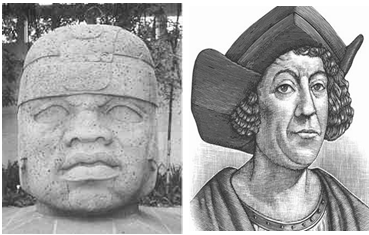
Meanwhile, the African explorers depicted in the Olmec heads are turning over in their ancient Mexican graves thinking, “Been there, done that…Where’s our holiday?”

Contrary to popular belief, Africans from Ancient Nubia and the Mali Empire came to the Americas more than 2,000 years before Columbus, and no, they were not slaves (you gotta make that clear for some folks). They were explorers and drifters who happened upon foreign lands and eventually became a part of the culture, influencing the art, language, and government of native civilizations.

Few know that the step pyramids at La Venta in Tabasco, Mexico, parallel those from Ancient Nubia and Egypt because of Nubian contact with ancient Mexicans, that the Olmec heads at La Venta resemble African men in facial structure and hair texture, or that Negroid skeletons dating back to 1250 AD were found in the U.S. Virgin Islands. According to historian Ivan Van Sertima, author of They Came Before Columbus: The African Presence in Ancient America (1976) and several other linguists, archeologists, botanists, and art historians researching in their respective fields, African pioneers crossed the Atlantic sometime between 800-680 BC.

Though many of us have never hear this information (f*ck what you heard!), this is not news. Nearly 100 years ago, historian Leo Wiener published a booked entitled Africa and the Discovery of Americas, which was immediately met with raciallycharged criticism and disbelief. Critics could not fathom Africans doing anything noteworthy, and denied the evidence of Africans in the Americas. Or, when they did accept the evidence, they assumed that those Africans were not explorers, but slaves brought over by Europeans.

Because of their “racial reflexes”, as Sertima calls them, scholars in academia were blinded by their racist views and failed to accept historical, linguistic, cultural, and biological facts that pointed to a glaring truth of African presence in the Americas.

Sadly, academia has not been purged of this racism—and we spoon feed it to our children. You won’t find much mention of African explorers in your school history books. Our education system is dangerously Eurocentric. Our history curriculums reinforce the same colonial ideas about race that the nay-sayers of academia make: black people are slaves, not explorers. In failing to discuss the ties between African and ancient American history in elementary through college classrooms, we silence truth and give Columbus, Vespucci, and other European explorers credit they shouldn’t fully possess. Leaving this history out of textbooks gives glory to white men and denies the explorations and successes of people of color.

I’m not saying Africans discovered America. That would be especially ignorant considering there were already great civilizations flourishing before their arrival, and I wouldn’t want to repeat that trend of not giving credit where credit is due. I’m also not saying that Africans were the only ones to arrive. The book also mentions contact with Asians, Polynesians, and other groups. Sertima sums it up perfectly at the end of his book: “all great civilizations are heavily indebted to one another… [and] no race has a monopoly on inventive genius.”

In honor of all the explorers of color, I highly suggest you pick up a copy of They Came Before Columbus or any other book that tells an alternative narrative of black pioneers. If the schools aren’t teaching it, we have to teach ourselves. #KnowYourHistory

7 Things That Happen When You’re the Only Black Person at Work

24 Jul
First job out of college and I’m the only black person in the office. It’s been interesting, to say the least.  Here are some of the funny and offensive moments I’m sure a lot of us solo black folks have experienced:
1. When you forget to code-switch your language at work.
GIF Oops
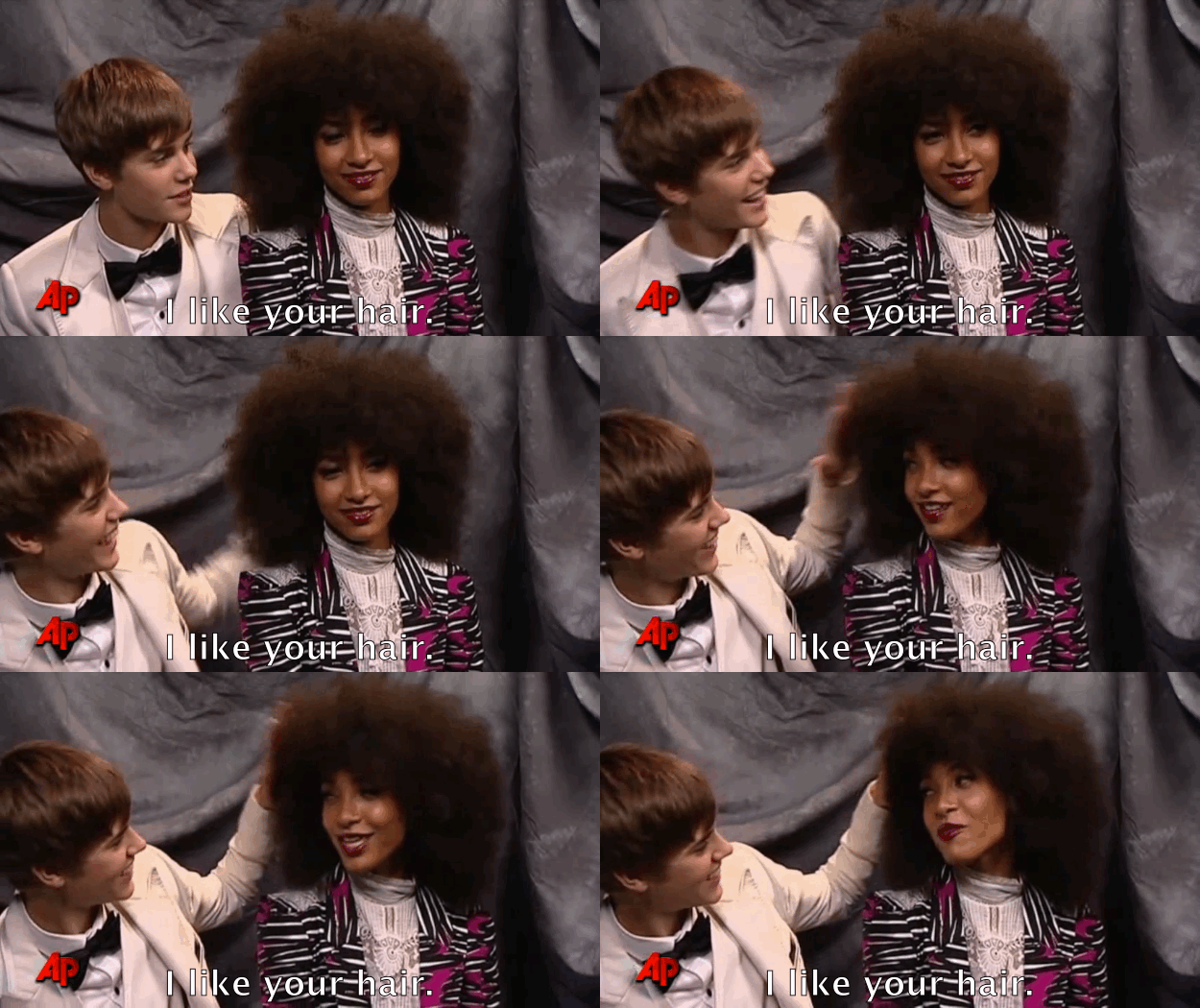
2. When your hair becomes a frequent topic of discussion. 
GIF hair
3. When you want to turn down your music in the office parking lot but this Kendrick song is EVERYTHING! GIF Car dance
4. When you’re at a loss for words because your white boss rolled his neck and snapped his fingers in an attempt to act out an “angry black woman.”
GIF 8
GIF Lord
5. When you don’t want to be a stereotype but you’re like “fuck it” and heat up your chicken in the office microwave anyways.
GIF oh well chicken
6. If your parents were a little creative with your name, people feel the need to ask and comment on it.
GIF So 2
7. When you frequently encounter microagressions at work and don’t quite know how to word your response.
GIF 9
Hey Y’all. really need your advice. At work, I’ve had to deal with some semi-racist (aka just plain racist) jokes that aren’t funny.
The thing is–there used to be one black woman in the office before I got there. Given the openly racist things that happen, I don’t think she said much about it. But I cannot be that person. I cannot let this go on while I’m at work and it certainly cannot continue after I’m gone. Then the next black person that comes along is going to have to deal with the same shit and will be stuck in this same awkwardness.
Some folks need to be told up front that what they’re doing is NOT okay. However, given the very casual, always-joking climate of the office, I’ve found it difficult to switch gears to a more serious tone and voice my opinion.
It’s easy to be outspoken with my keyboard, but in person I am sometimes more shy and reserved. I’m new to this office and don’t want to create any tension or drama, but I have to do something about it because it feels wrong not to. I can’t be that person who talks tough on the internet and becomes spineless in person.
How should I handle this?