A few years ago, my boyfriend and I sat in a movie theater in Malibu, watching the opening of Couples Retreat. When the first black actress came on the screen, my date smacked his teeth in disgust. The woman was loud, obnoxious, and senseless. Within the first 5 minutes of seeing her on the screen, the only other black couple in the theater walked out.
They were lucky: Had they stayed any longer they would’ve seen the other black woman in the movie, who was louder, violent, and even more irrational, knocking other women out of her way while she searched for her cheating husband.
It wasn’t the first time I’d seen that black woman on the screen, and definitely wouldn’t be the last. Although not all black characters in film behave as badly, actresses of color are often pigeon-holed into playing the same typecast roles again and again.
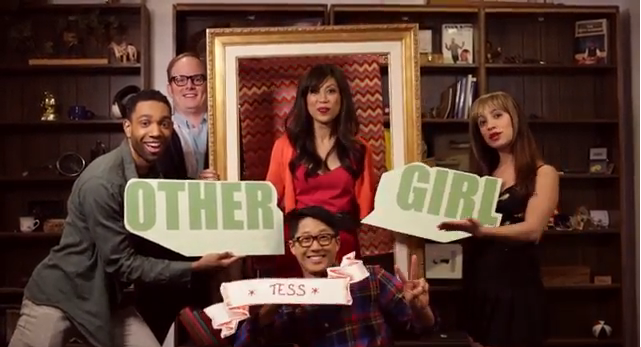
In “Typecast,” their brilliant parody of Lorde’s “Royals, actresses Tess Paras, Haneefa Wood, and Ayana Hampton display that for actresses of color, the road to stardom means playing race-based, cookie-cutter characters, with the role of the leading lady often remaining just out of reach.
Actresses who look like the ones in the video are sometimes subjected to typecast roles: Sassy black girl, geeky Asian, fiery Latina. Actresses of other races and ethnicities may not even be considered for a part. This leaves opportunities few and far between for actresses of color.
When placed in a historical context, Typecasting becomes even more problematic. In the parody, as Hampton sings, “Any maid could look like us,” I was taken back to the historical mammy figure. While we’ve come a long way from the Hattie McDaniel’s mammy in Gone with the Wind, the pool has only expanded wide enough to include other stereotypes and subordinate roles, with a few exceptions here and there.
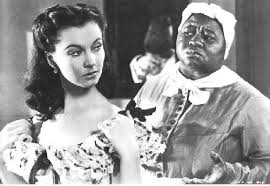
Hatti McDaniel in Gone with the Wind
Typecasting women of color into supporting roles such as the main character’s best friend, secretary, or nanny, reinforces the idea that people of color are only supporters or “extras” in America, while white people are the central figures. It displays a dynamic where actresses of color don’t have their own story outside of helping the main character, not unlike the historical mammy, who usually has no life outside of serving her bosses. Such roles are seen in movies like Sex and the City, with Jennifer Hudson playing Sarah Jessica Parker’s personal assistant, and in the upcoming comedy The Other Woman, with Nicki Minaj playing Cameron Dias’ legal assistant.
Then there is the obvious problem with typecasting: the roles play off of stereotypes that project sexist and racist ideas. When consistently casting women of color for the same typecast roles, the industry renders possibilities for these women to exist outside of their stereotypes unlikely. While typecasts like the fiery Latina, nerdy Asian, and sassy black girl, are usually written for comedic affect, they reduce human beings to a one-dimensional devices that garner a few laughs at the woman’s expense and move the plot along.
Moving away from these stereotypes and adding some color to leading lady role can be good for audiences. After backlash from fans of movies Annie (2014), Hunger Games, Catching Fire, and Fantastic 4 (2015), where black actresses and actors were cast for traditionally (or what people believed to be traditionally) white roles, maybe audiences could use a little help expanding their imagination. It seems that when actors of color are cast in central, not typecasted roles, racist commenters masking themselves as “fictional purists” storm twitter with remarks about how their favorite character’s skin should be white. Yet, the more we see actresses of color playing central figures, the more we can shed the stereotypes and break down barriers for women in the industry. Maybe then American audiences will become a little more comfortable with diversity on the screen.
While we’re moving in the right direction, with shows like Scandal and The Mindy Project (though they also have their flaws) and movies like the latest remake of Annie, we still have a ways to go before we see more accurate and equal representation.
P.S. This article is part of the Top Posts. Check out the Best of A Womyn’s Worth.



 A Woman's Worth
Black Feminist Backlash I’m Tired of Hearing
28 FebTop 5 Things Not to Say to a Black Feminist
“Uh oh, she quoted bell hooks. That’s how you know it’s serious,” said one of my guy friends while reading an article I’d written on Katy Perry’s cultural appropriation for the Ms. magazine blog.
He and another friend were impressed with my stance on appropriation’s way of reinforcing harmful stereotypes, but their response wasn’t the general response.
Of course, that wasn’t the only article I’ve written that’s gotten negative feedback, and I’m not the first writer to ever be told that my work is “a load of bs.” However, as I review the comments on my writing and on the writing of other black feminists on the web, I’ve noticed a pattern of backlash. The disapproving comments usually fall into 5 main responses. And since I’m sick of reading the same old comments on every black feminist/womanist blog or website, I think it’s time to address the backlash. Read more…
Author’s Note: Hey Everyone. This article was originally published on XO Jane (Ya girl got published again!). So you can read the rest of the article there. Hope you enjoy!
Oh, and heads up! A Womyn’s Worth got a Facebook page (I know—long overdue). So like it on Facebook, share it with your friends, and enjoy.
P.S. This article is part of the Top Posts. Check out the Best of A Womyn’s Worth.
Share this:
Tags: Beyonce, Black Feminism, comments, Lily Allen, Womanism