Originally published on Racialicious.
“So you’re going to twerk right?” was a common question my sorority sisters and I got when we entered a dance competition this year at our school.
Not too long ago, the university I attend welcomed its first historically black Greek-letter organization. I had the privilege of becoming a member of this sorority and was curious to see how the students of a predominately white university in a wealthy area would receive a historically black organization on its campus.
The university was widely accepting of the sorority; however, as we became more visible on the campus, we experienced much cultural insensitivity.
This year, for the first time, we participated in a sorority dance competition that raises money for charity. During the week leading up to the dance-off, several people approached us asking if we were going to twerk — as if twerking is the only style of dance a black woman can do.
Yes, most of the pleas for us to twerk on stage were jokes—you know, those obnoxious, not so funny, purposefully racist jokes—the same jokes many people shrug off and laugh along with because they are believed to be harmless.
Yet, there is a serious problem when we idly allow people to make ignorant and unacceptable comments, especially those that trivialize issues of class and race. As we read in the article, “Let’s Get Ratchet! Leave Your Privilege at the Door,” also featured on Racialicious, views about twerking employ certain bigoted ideas about poverty and black culture.
These comments and jokes about our sorority twerking relate to the effects of a black woman’s image based on media coverage. With the countless Twerk Team videos on Youtube and the glorifying of a “bad bitch” who can “bend it over and touch her toes” in commercial hip hop lyrics,this style of dance has become a fabricated indicator of “authentic” black womanhood. Essentially, the conversation about the style of dance becomes: all “real” black women can twerk.
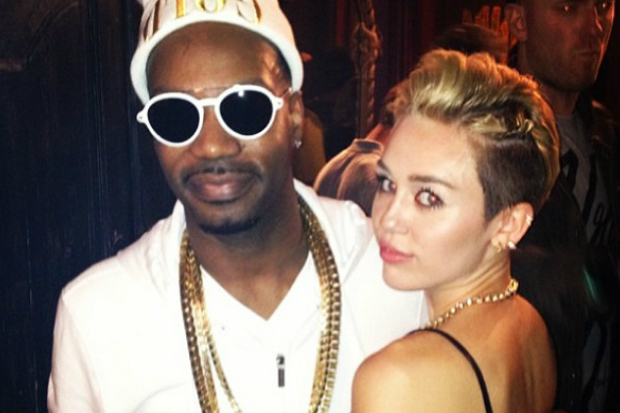
This expectation is progressed through the numerous videos of young black women popularizing the dance style online (They aren’t the only ones doing it, but they are a significant majority). On one hand, if a woman chooses to dance sexually that is her choice. However, I find it problematic if her decision to twerk comes from commercial hip hop’s ideas about women (none of which are uplifting) and the songs that accompany the dance, such as French Montana’s “Pop That” and Juicy J’s “Bandz A Make Her Dance,” which demand a woman’s complete submission in order to sexually please her male company. Type “twerk” into youtube and you’ll find several young women accepting the sex-object role that the music demands of them. These demands become increasingly problematic when they involve race and gender. Notice that no expectations are placed on men or women of other ethnicities to twerk. People are often shocked when white women do it.
As it is extremely provocative, twerking suggests a lot about black sexuality. As feminist theorist Patricia Hill Collins discusses in Black Sexual Politics, African Americans’ use of their bodies is heavily promoted and celebrated above other abilities, such as intellect.
Maybe that is why there aren’t many stereotypes about black women being smart.
The focus on black bodies is not a new concept. Author Norman Kelly explains in Rhythm and Business that these ideas date back to slavery, when bodies were used to cut sugarcane and harvest tobacco, and raped to produce more bodies for labor. Yet, too much use of the mind was prohibited, as reading was illegal.
This use of bodies, specifically, the focus on what twerking accentuates, a woman’s behind, dates even further back to the 19th century, when Saartjie Baartman first made her appearance in Europe as the freak show Venus Hottentot. People visited the show to gawk and mock her huge behind and peek under her clothing to look at her vagina.
These 19th century views continue to exist in the comments about twerking. When people expect or demand that we twerk, black women are once again reduced to a piece of ass.
Unfortunately, many people of color have adopted some of these external views on black sexuality, as several of the jokes about our sorority twerking came from other African American students on campus. During the preparation for another show, one black student who saw us practicing also asked if we would twerk for our half-time basketball game performance. In asking this, he and other students of color who made similar comments participate in progressing harmful stereotypes of black women. Because this guy’s mind went right to twerking when he heard we were dancing, his views of women how black women should appear on stage have been influenced by disgusting stereotypes of black women in popular culture.
As leaders and promoters of equality, we must amend the incorrectly-deemed “harmless” jokes and comments about black sexuality, as they further the idea that black people are only good for physical activities such as manual labor, dancing, and sex. These jokes suppress ideas about successful black scholars and intellectual leaders.
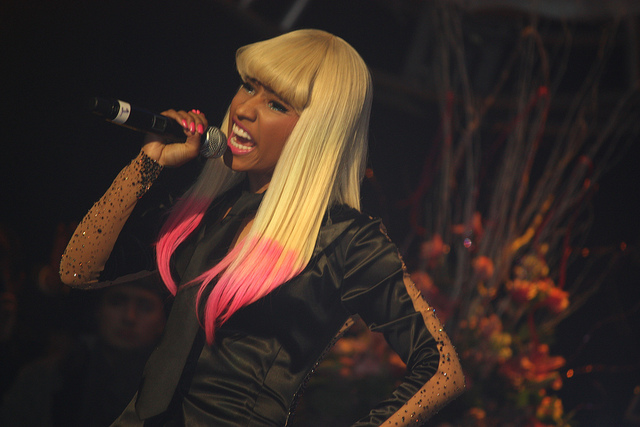
When these dehumanizing ideas circulate in popular culture, I am concerned about how they affect our self-narratives and self-esteem. Growing up, my friends and I wrestled with what it meant to be authentically black. Our music interest, sense of fashion, and ways of dancing were all influenced by external ideas about black culture that we saw in music videos, on the radio, and from our peers (this was just before Youtube and Twerk Team became popular). As much of my teenaged perception about what “authentic” blackness meant came from BET, where currently Nicki Minaj acts as an updated Venus Hottentot (as much of her brand, appearance, clothing and lyrics point to the same two body parts Europeans gawked over at Baartman’s freak show: her ass and vagina). I eventually had to unlearn a lot of the demeaning ideas of black womanhood I was exposed to. I am still in the process of unlearning.
Calling people out on their rude jokes and comments aids this unlearning process and teaches them about the stereotypes they uphold when they make such comments.
Authors note: Hello All, I wrote this article when I was new to feminism and hadn’t realized the harm of respectability politics. My views have changed. Check out the articles below, which are more up-to-date on my Black feminist politics.
Tags: A Womyn's Worth, Black Feminism, Black women, Hip Hop, Nicki Minaj, Patricia Hill Collins, Racialicious, Twerk, Twerk Team, Venus Hottentot



 A Woman's Worth